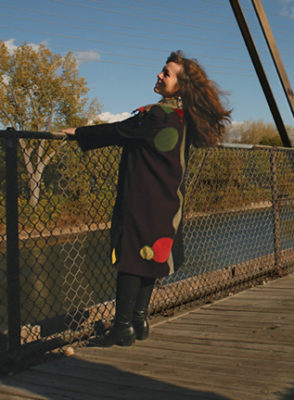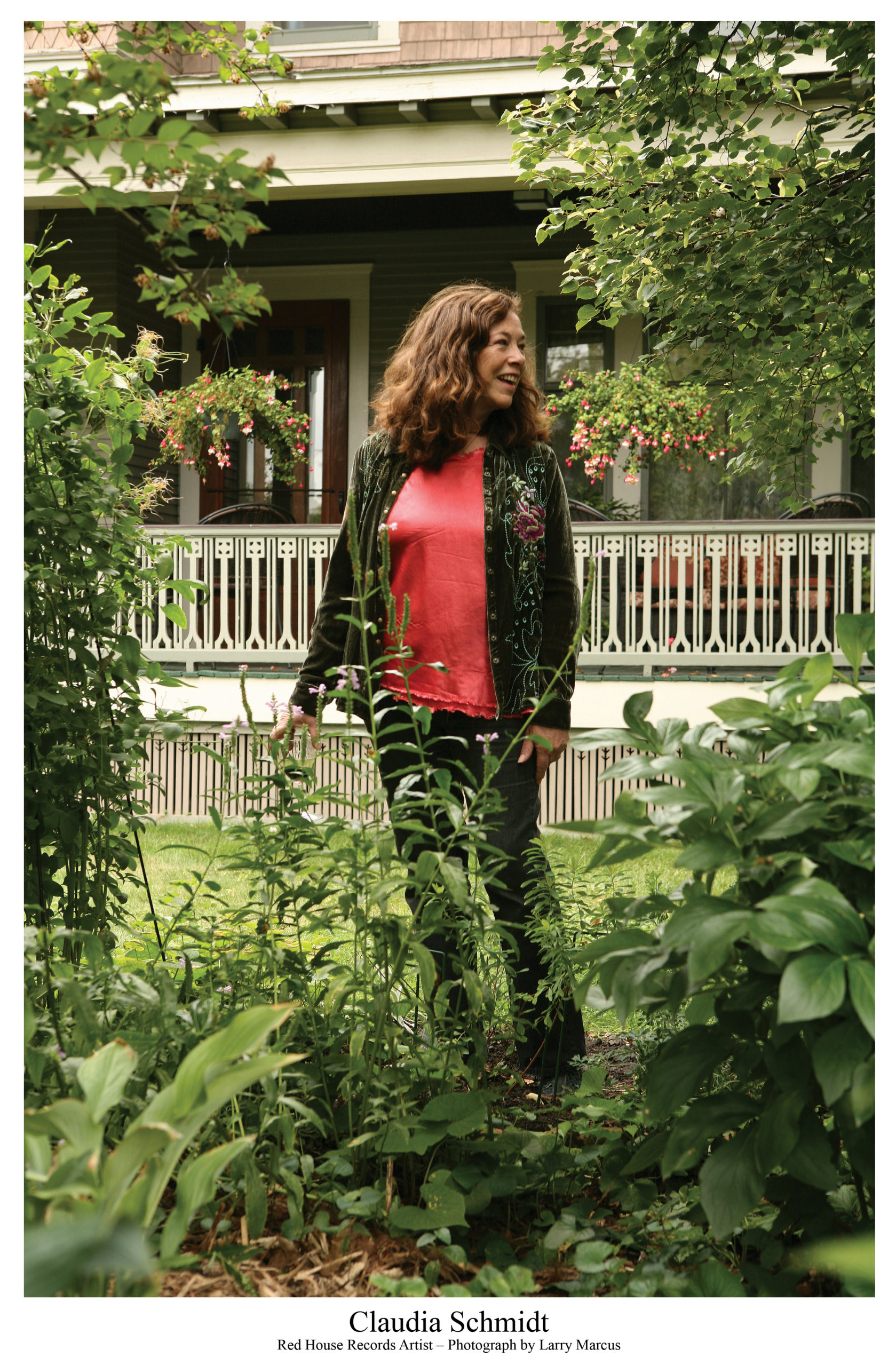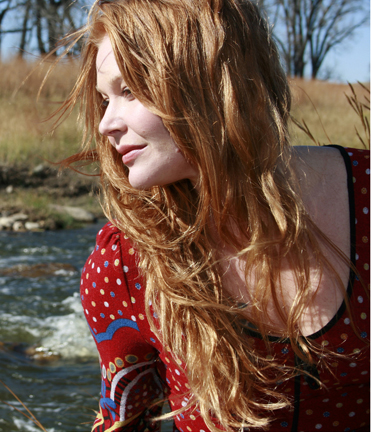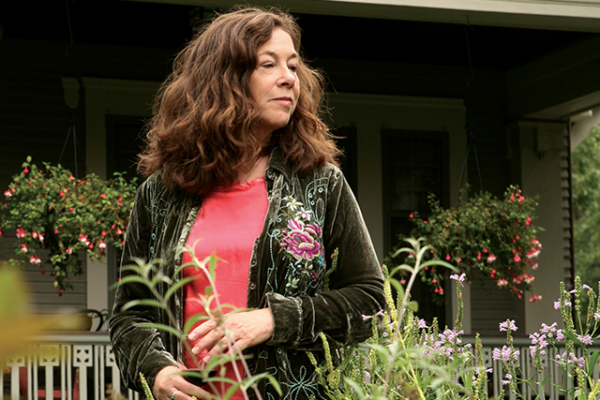
Claudia Schmidt is a powerful vocalist and adventurous artist, who combines lively folk, jazz and blues with rich poetry and playful humor.
Hailing from Michigan, she knew at a young age that she was destined to be a singer. Performing in numerous choirs throughout her youth, Claudia soon pursued a professional career while in Chicago, leading her to Wisconsin and Minnesota, where she was a frequent guest on the early days of A Prairie Home Companion. More than thirty years and 16 albums later, Claudia continues to perform on the road to her loyal legions of fans across the country. Mixing folk, jazz, traditional ballads and breathtaking originals, there’s not a style she can’t master. Claudia ‘s incredible voice and charismatic stage presence makes her a marvel in concert.
In the middle of her career Claudia took a detour from her music and opened a bed and breakfast with her husband on Beaver Island in the middle of Lake Michigan. But Claudia always kept music as a close companion, leaving for short tours during this period. Eventually the muse struck her again and Claudia returned to recording and touring fulltime.
Claudia has recorded 16 of her own albums, including five on Red House Records and two with singer-songwriter Sally Rogers. She was also featured on Gales of November, a musical theater piece written by Eric Peltoniemi featuring Prudence Johnson, Ruth MacKenzie, Peter Ostroushko, Dan Chouinard and Jeff Wilkomm.
With an infectious energy and joy, Claudia continues to tour the country, delighting audiences with her spectacular vocals and instrumental prowess. Now living in Minneapolis, she releases Bend in the River: Collected Songs. A fun, wide-ranging collection of her finest Red House material, it is the album that fans have been waiting for.
In 2012 she released a retrospective, Bend in the River: Collected Songs, a fun, wide-ranging collection of her finest Red House material.
Her 2014 studio album, New Whirled Order, saw Claudia returning to the Red House Records fold for her first new album since 2000. With an infectious energy and joy, she continues to delight audiences with her spectacular vocals and instrumental prowess.
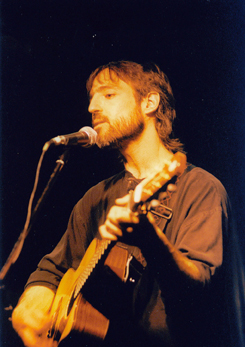
Chuck grew up in the Philadelphia. As a teenager he worked at a legendary folk club, the Main Point, where he was introduced to a lot of great songwriters and performers (such as bluesman George Gritzbach and Steve Forbert). Others who influenced Chuck include Bob Dylan, Nic Jones, Jackson Browne, David Massengill, and further toward the literary side, Mark Twain. They say that to tell great stories you have to live an adventurous life. It’s a tip that Chuck Brodsky took to heart. In 1981, he took his guitar and hitchhiked to California. He’s worked as a migrant fruit picker, drove an ice cream truck, labored on an Israeli Kibbutz, worked for a book distributor, was a bank courier (until he lost a check for ten million), and spent two years street-singing in Europe. In the process, Chuck learned what all great writers know–that the best stories are the little things in the lives of everyday people who are trying to muddle through with some grace. Chuck’s great gift as a writer is to infuse these stories with humanity and humor, and to make them resonate profoundly with his listeners.
In 1996, Chuck (who now lives near Asheville, NC) signed with Red House Records and released Letters in the Dirt, introducing us to great characters such as a roadside peach vendor still wondering after thirty years if he married the right woman (“Bill & Annie”), and the first white baseball player in the Negro Leagues (“The Ballad of Eddie Klepp). The album earned critical raves from around the country. His 1998 release Radio was even more widely acclaimed for its great stabs at our laughable culture, like “The Come Here’s & the Been Here’s,” “Our Gods,” and “On Christmas I Got Nothing.” For a three month period shortly after its release Radio was the 3rd most frequently played album on Americana stations nationwide.
Chuck has toured everywhere from the US to Canada, Ireland and Israel. He has played at many of the major folk festivals including Kerrville Folk Festival and Winnipeg as well as appeared on many of the major syndicated radio programs such as “Mountain Stage” and “Acoustic Cafe.” His songs have been recorded by Kathy Mattea and Sara Hickman and his song “Radio” was used by NFL Films for a national broadcast on ESPN about a man with Down’s Syndrome who is adored by his whole community.
His down-to-earth presence, touching storytelling, and his dry, barb-witted social commentary bring both tears and laughter to the listener, often during the course of the same song.
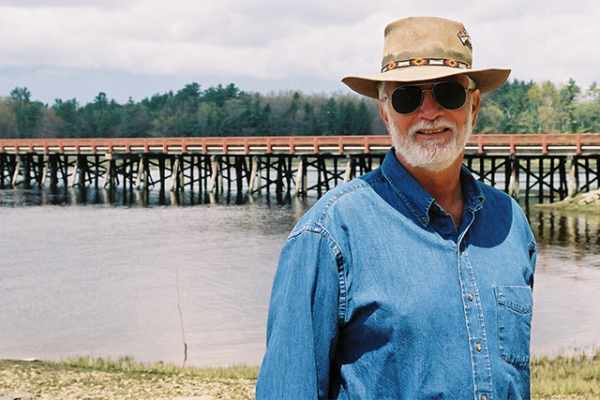
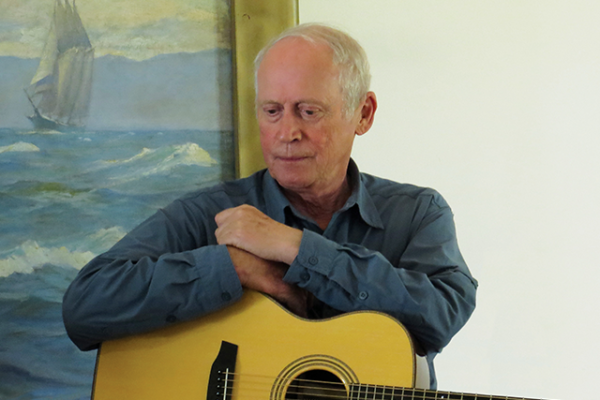
For more than 45 years, Bill Staines has been the quintessential folk troubadour, singing his songs at the country’s top festivals, concerts, clubs and coffeehouses. Playing 200+ dates a year and driving over 65,000 miles annually, his music is a slice of Americana, filled with cowboys, Yukon adventures, fisherman and everyday working people. He writes lovely, infectious melodies, and his story-filled lyrics recall with compassion and depth the landscapes and characters he’s known. His songs evoke a remarkably strong sense of emotional and physical place, and in the words of the Austin American Statesman, they have the “ability to translate the common details of common lives into songs of uncommon eloquence and beauty.”
Bill Staines has spent over four decades on the road singing his songs and entertaining audiences. A New England native, Staines became involved in the Boston-Cambridge folk scene in the early 1960s and, for a time, emceed the Sunday hootenanny at the renowned Club 47 in Cambridge. He quickly became very popular in the Boston area. In 1971, after one of his shows, a reviewer for the Boston Phoenix insisted that Staines was “simply Boston’s best performer.” A decade later (in 1980 and 1981) the annual Reader’s Poll of the Boston Globe named him one of Boston’s favorite artists. In the meantime, his reputation as a songwriter and troubadour grew across North America. Staines also made his mark yodeling. He learned the traditional art by studying the recordings of great yodelers such as Jimmie Rodgers and Montana Slim. He won the National Yodeling Championship at the Kerrville Folk Festival in Kerrville, Texas in 1975, and has become a perennial instructor of yodeling workshops.
With his wonderful songs, his warm, smooth baritone, his prowess on guitar, his charm and his gentle humor, Staines is consistently one of the most popular singers on the folk music circuit today. He’s also a favorite of other folk singers and a significant influence on many. His songs have been recorded by other musicians, including Peter, Paul & Mary, Nanci Griffith, Makem & Clancy, Grandpa Jones, Priscilla Herdman and Jerry Jeff Walker. Over eighty of Staines’ songs have been published in three songbooks: If I Were a Word, Then I’d Be a Song; Music to Me: The Songs of Bill Staines; and All God’s Critters Got a Place in the Choir. His radio and television appearances have included A Prairie Home Companion, Mountain Stage, The Good Evening Show, and he has hosted local programs on PBS and network television.
Staines has recorded 26 critically acclaimed solo albums, many of which have been released on Grammy-winning Red House Records, the label with which he has enjoyed the longest association. He has recorded two children’s recordings–One More River and The Happy Wanderer, which topped Pulse’s yearly Children’s Music and Folk Top Ten lists in 1993 and was honored with a Parents Magazine Parents Prize. A much loved live performer, he has released several retrospective albums, including October’s Hill and The Second Million Miles. He also continues to write and release new original music. His 2007 release Old Dogs charted on folk and Americana radio, and his latest album Beneath Some Lucky Star is among his fans’ favorite.
A veteran performer, Staines can be considered a model for artistic longevity and vitality. He continues to satisfy his huge nationwide fan base with great new albums and performances, while continuing to write the classic songs that have always won him praise.
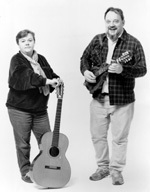
Bill Hinkley and Judy are a musical treasure. Over decades of playing folk and bluegrass the duo has appeared with such greats as Steve Goodman, Dave Van Ronk, Willie Murphy, Ramblin’ Jack Elliot, Koerner, Ray and Glover as well as regular appearances on Garrison Keillor’s A Prairie Home Companion. The two are top-notch performers entertaining audiences with their delightful tunes as well as their captivating presence.
Bill and Judy are members of the Minnesota Music Hall of Fame as well as recipients of a Lifetime Achievement Award from the Minnesota Bluegrass and Oldtime Music Association.
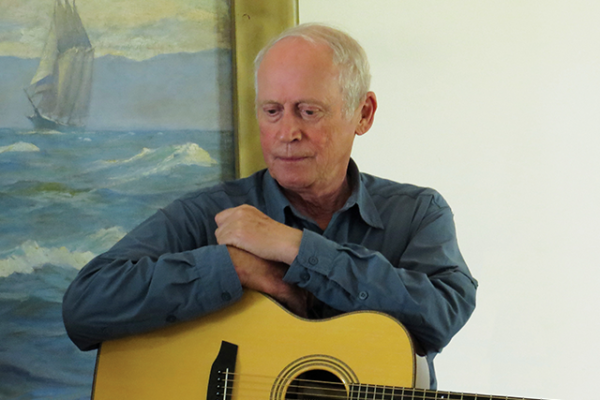
Archie was born in Glasgow into a large singing family, which yielded three professional singers—Archie and his sisters Ray and Cilla Fisher. His father’s appreciation of many musical styles (opera, vaudeville, traditional ballads) proved to be a heavy influence on Archie’s music while his mother, a native Gaelic speaker from the Outer Hebrides, influenced the lyrical quality of his songwriting.
Archie first became interested in folk music during the Skiffle era of the late 1950’s and such performers as Lonnie Donegan and Johnny Duncan. Later, the recording of the Weavers at Carnegie Hall also had a profound effect on his approach to music and his political outlook. During the TV folk boom of the 1960’s and 70’s he appeared regularly with his younger sister Ray on magazine programs and the BBC Hootenanny series. He was based in Edinburgh at the time in the contemporary company of musicians such as Robin Williamson, Clive Palmer and Mike Heron (who together formed The Incredible String Band) and was an early guitar colleague of Bert Jansch.
Archie’s first self-titled album was recorded in 1968 with the fiddle and mandolin of John McKinnon and whistle player John Doonan. During the mid 1970’s he formed a long-term partnership with Dundee musician Allan Barty, which was later grafted on to the revived pairing of Tommy Makem and Liam Clancy. As well as performing as a backing musician and arranger for the Makem and Clancy duo, he also produced a series of albums with them. Meanwhile, Archie got involved in record production with the dynamic Scottish band Silly Wizard. During the 1980’s he turned his attention to freelance radio work and originated several series of documentary programs with his local station Radio Tweed. He then returned to the recording studio during what he describes as one of his most creative songwriting periods. It was around this time that he began a partnership with Canadian songwriter Garnet Rogers. They toured throughout North America together, and Garnet produced two Fisher albums including the highly acclaimed Sunsets I’ve Galloped Into, which was released on Red House Records in 1996.
Following the success of that release, Archie toured throughout North America, playing with John Renbourn and Bert Jansch. In 2008 Red House released Windward Away, a collection of introspective ballads that evoke the wild and rough beauty of the Scottish Border country. While working on this album, Archie discovered a copy of an old recording he made in the late 1970’s while working with Tommy Makem and Liam Clancy. Although several songs on this missing master had been recorded on other Archie Fisher albums, this missing master had never seen the light of day. Because he believed these recordings represented an important period in his music, he felt they were worthy of formal release. Together Windward Away and The Missing Master represent more than 28 years of Archie’s distinguished writing and singing career.
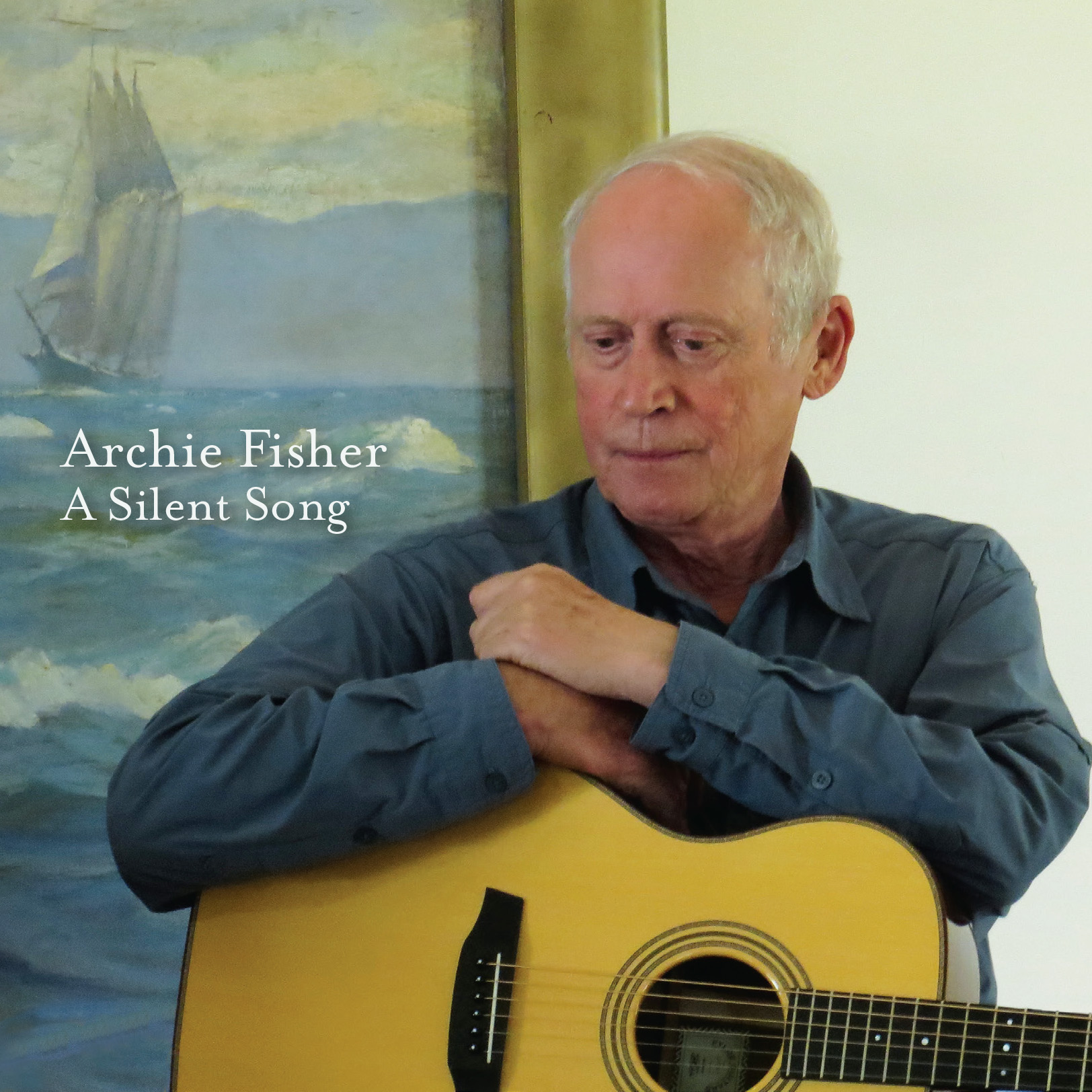
Seven years in the making, A Silent Song finds Archie combining original compositions with his interpretations of classic songs for a wonderful addition to his distinguished catalog.
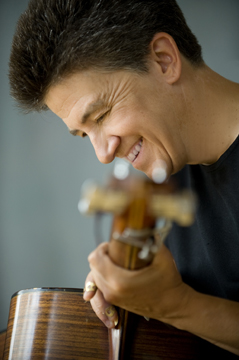
Ann Reed is a singer-songwriter who has been producing dazzling folk music for a quarter century and shows no signs of ceasing. Her delightful songwriting has been the favorite of her abundant fanbase playing countless concerts and festivals. She is a favorite of A Prairie Home Companion as well as Minnesota Public Radio’s The Morning Show (now Radio Heartland). Over the course of her career, Ann has garnered accolaides from the likes of Billboard Magazine, the Natrional Association of Independent Recording Distributors, the Minnesota Music Academy, and the Girl Scouts.
Ann has released two albums on Red House including Just Can’t Stop (1986-out of print) and Talk to Me (1990).
When she’s not on the road, writing, or playing music, Ann spends a great deal of her time in community involvement with various non-profit groups that benefit women and children.

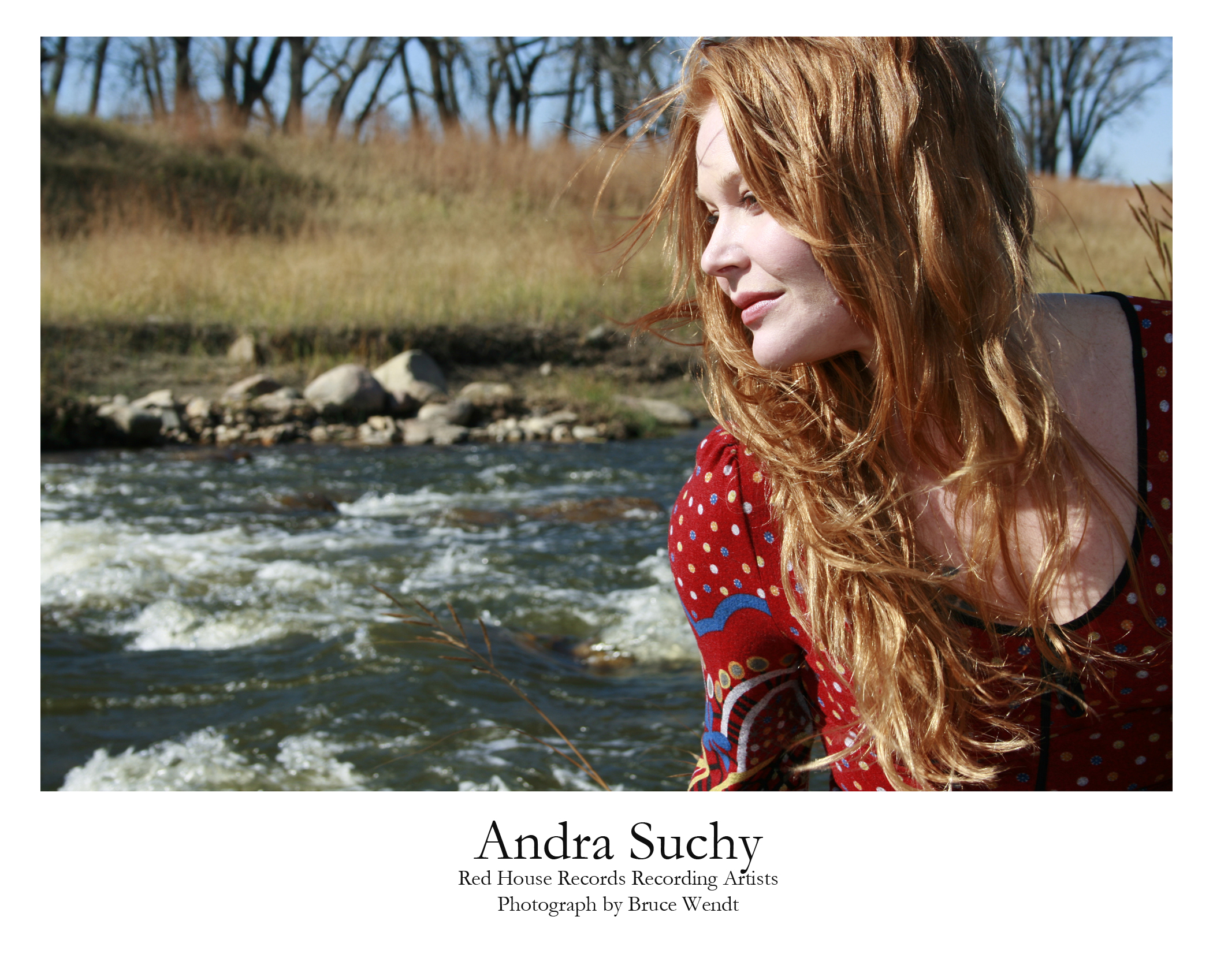
Raised on a beef and wheat farm in North Dakota by folk musicians, Andra Suchy began touring and performing at festivals at a young age. Classically trained and a veteran of musical theater, the guitar-playing singer moved to Minneapolis in 1996, where she has gone on to make a name for herself as one of the finest vocalists around.
A regular performer on the national radio show A Prairie Home Companion, Andra has performed around the world, singing with such artists as Brad Paisley, Mindy Smith, Emmylou Harris, Chris Thile and soprano Renee Fleming. She has recorded with a wide range of indie, rock, blues and folk acts, including The Honeydogs, Jonny Lang, Peter Ostroushko and Soul Asylum’s Dave Pirner.
Full of infectious originals, Little Heart is a twang-tinged mix of country, rock, folk and blues, this album shows that Andra is poised to become the next big voice in country, Americana and roots music.
When not on the road, Andra knits, practices Bikram yoga, bakes bread and performs around Minnesota.
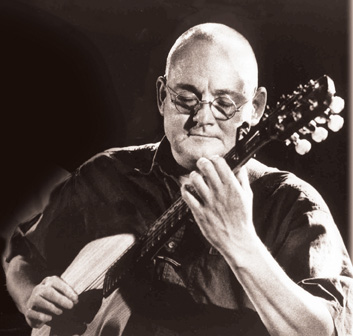
Born in the Salvation Army Hospital in Hackney, London, Legg is a classic mongrel Londoner, with the long mixed East End blood of entrepreneurial Hugenot and Jewish refugees topped up from a sturdy line of East Anglian farmers; a fertile genetic stew mixed further with Welsh, West Indian and Philippino in his grandchildren.
While studying oboe under parental pressure (his own words), he began fashioning his own guitars, “or rather odd stringed instruments that at least could execute an acceptable twang” from pictures in newspapers, scraps from the school woodwork scrap bin, fret wire and with strings held on by head rest cover containers taken from the local bus station. While working at the airport in Liverpool, he met a young man who invited him to join a band and introduced him to country music.
After two years of working in Liverpool working men’s social clubs, he hitch-hiked back to London, where he played electric guitar in clubs and joined up with bands that eventually traveled outside the U.K. A demand from a band leader that he use an acoustic to play loud chords up against a mic for one number nudged him towards the acoustic as a separate instrument.
Since then Adrian Legg has gone on to become a guitar wizard who defies all categorization. His virtuostic playing can take you places you have never imagined. Legg’s unbounded creativity and grace, led him to be voted the “Best Fingerstylist” by the readers of Guitar Player magazine. Legg is, without exaggeration, one of the finest guitar players alive. Few artists can cover such a spectrum of music on one instrument. His albums showcase his intricate and elegant blending of country, jazz, folk, rock, and classical influences.
Beginning with Guitar and Other Cathedrals (released in 1990) he has displayed remarkable technique and intuition, great wit and humor, and a gift for composing lyrical melodies. Guitar for Mortals (1992) and Mrs. Crowe’s Blues Waltz (1993) were each named “Best Acoustic Album” in the Guitar Player polls, and in 1994 Wine, Women and Waltz was honored as “Best Overall Guitar Album,” a rare feat for a primarily acoustic work. The readers of Britain’s Guitarist Magazine topped them all, naming Legg the “Guitarist of the Decade” in their 10th Anniversary Poll.
Not only is Legg an instrumental genius he also has a reputation for his funny stage presence. His deadpan humor and hilarious stories have been as much of a concert draw for him as his music. He has been a commentator-at-large for National Public Radio’s All Things Considered. He has toured with such varied artists as Nanci Griffith, Tanita Tikarum, Joe Satriani, Eric Johnson, and Steve Vai – converting more “Leggheads” as he goes.
On his last Red House release, Fingers and Thumbs, Legg delivers plenty of classic flowing guitar eloquence as well as some quirky detours. Recorded with Eric Johnson, bassist Roscoe Beck and drummer Tom Brechtline, it’s a runaway train of guitar and rhythm. “Not Remotely Blue” was written in 1974 and promptly abandoned when he relized his “Englishness predisposed [him] to depression rather than any convincing blues.” He pulled it out again in 1998 when he “no longer cared”–much to our benefit. Not only is Adrian a world-class guitarist, but as an avid photographer his work highlights the packaging of Fingers and Thumbs. Adrian continues to keep a healthy tour schedule traveling the US and UK wowing crowds with his jaw-dropping style.
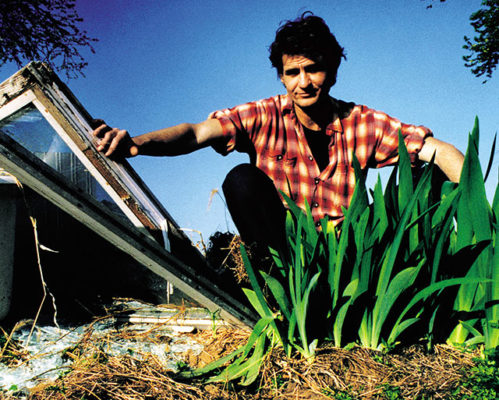
Dave Moore is one of the great songwriters to come out of the state of Iowa. Known for his elegant songwriting and instrumental prowess on blues guitar, button accordion and harmonica he has become somewhat of a legend. Coming of age in the late ’60s and early ’70s, Dave enrolled in college only to drop out to follow a girlfriend down to Guadalajara, Mexico. Though the journey lasted only a few months, it was to be the first of many travels in Latin America and totally altered his world view. Returning to the States for the holidays in 1971, his mother serendipitously left a harmonica in his Christmas stocking and he soon found that he could not quit playing it. He spent the next few years traveling the Southwest and Northwest, working an assortment of jobs (lumberyard worker, fruit picker, plumber’s assistant) – all the time getting deeper into music.
After his western travels and another lengthy sojourn in Latin America (Colombia, Ecuador, Peru) he found that the college town of Iowa City had turned into quite the music scene. Folk, blues, and rock were spilling into the streets as music hangout began to pop up all over the city.
Around this time, he began to experiment with guitar and decided that he wanted to learn the instrument. Inconspicuously, he headed back to Mexico-this time to a town that has since become a home-away-from-home, San Cristobal de las Casas. With only a little plywood-topped Harmony 6-string, he holed up with a box of blues tapes and took occasional lessons from a Chiapas guitarist with a passion for American ragtime.
In 1980 Dave returned to Iowa City and teamed up with local songwriter Greg Brown who was just beginning to develop a national reputation. For the next few years Dave backed up Brown on recording projects, extensive tours and several appearances on Garrison Keillor’s popular A Prairie Home Companion on NPR.
It was at this time Dave stumbled onto his other great musical passion, the accordian. Awestruck by an accordion album featuring Fred Zimmerle’s Trio San Antonio, he traveled to Texas where he sought out the great masters of Conjunto music: Zimmerle, Johnny Degallado, and Santiago Jimenez, Sr. (the legendary father of Flaco and Santiago, Jr.). All three men would give him lessons and encouragement on the 3-row button box.
In 1984 at a little folk festival, Dave won a contest whose prize was free recording time in a studio. He took the oppurtunity to record Jukejoints and Cantinas, an album that brilliantly pulled together all of the American roots influences that had been stewing in him for years. He passed its 14 sizzling blues and Conjunto tracks on to Bob Feldman of Red House Records, who enthusiastically offered to put it out.
The release of Jukejoints… led to a National Endowment for the Arts grant that underwrote three intensive months in Tejas studying with accordion master Fred Zimmerle. Occasionally sitting in with Fred’s band in the dance halls, Dave found himself completely immersed in a major American regional music tradition. Fred quickly became one of Dave’s closest friends and until his death, the closest thing he had to a mentor.
In 1986 Garrison Keillor invited Dave to perform on A Prairie Home Companion and after frequent appearances, he became the show’s band leader on tours to Alaska and Hawaii. A year or two earlier he had quietly started writing his own song and in 1990 he released Over My Shoulder, an 11-song collection that has become a cult classic.
Moore was in preproduction of his third disc in 1994 when his wife lost a daughter in infancy. He stopped playing for a while, and when he did return, preferred to stay closer to home and family. Five years went by, songs accumulated and, in time, a desire to return to recording and touring. He had written an enormous number of chilling-to-the-bone songs based on his own experiences.
In mid 1998, he announced that he was ready to record again. Seeking a co-producer for the project, he looked to Iowa City roots-rocker Bo Ramsey, who had produced several discs for Greg Brown and had just finished touring in Lucinda Williams’ band. Dave had long admired Bo’s work and instinctively felt he was the best man to guide the recording session.
The result was Breaking Down to 3, an album that is considered his best ever. Recorded with an all-Iowa band, the songs are as breathtaking as they are stunning with vivid imagery drawn from the depth of his life experiences painting a picture of the quintessential American journey.
-->