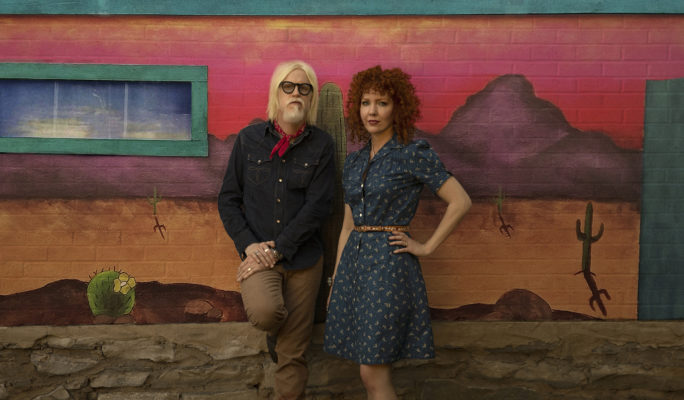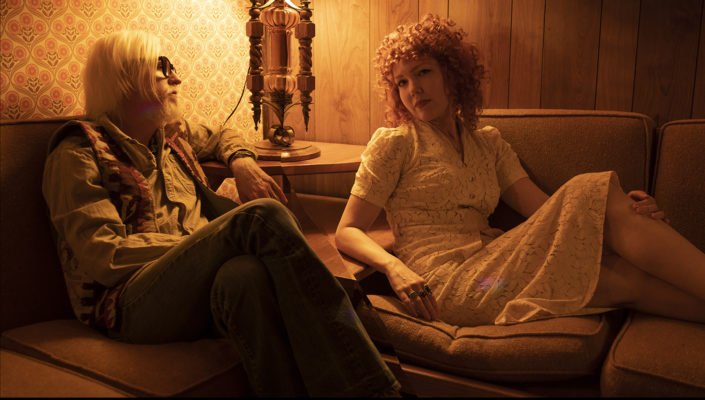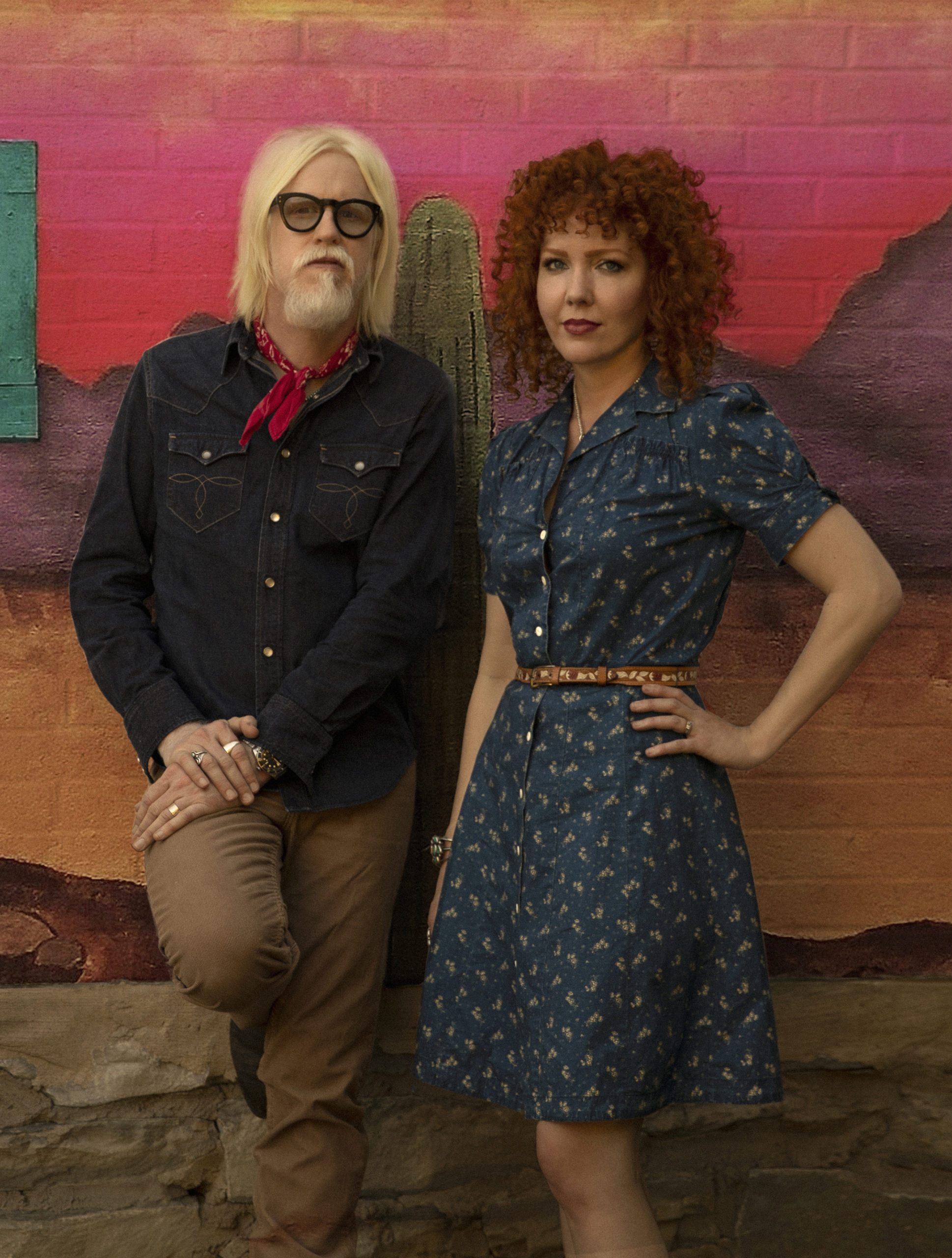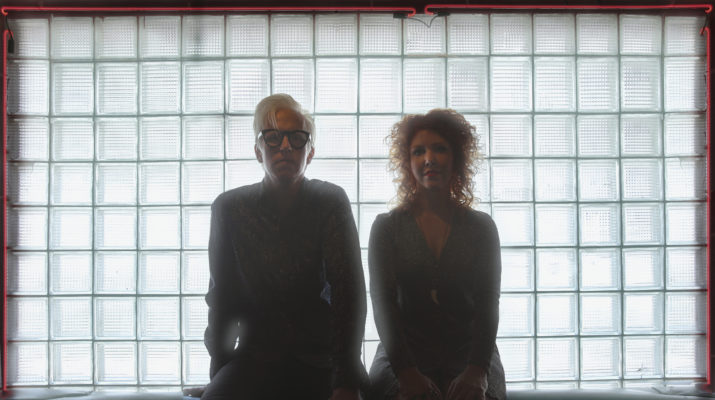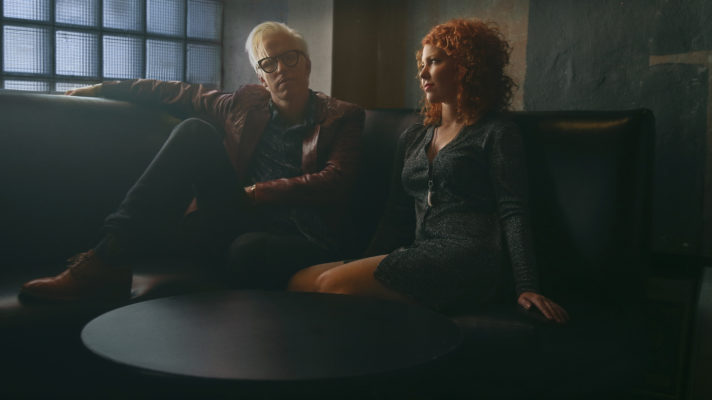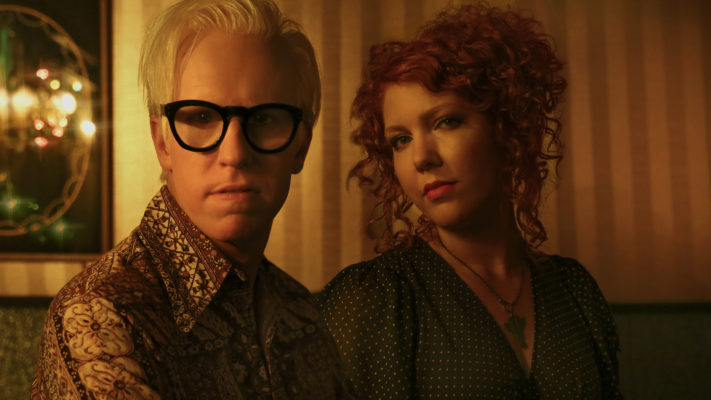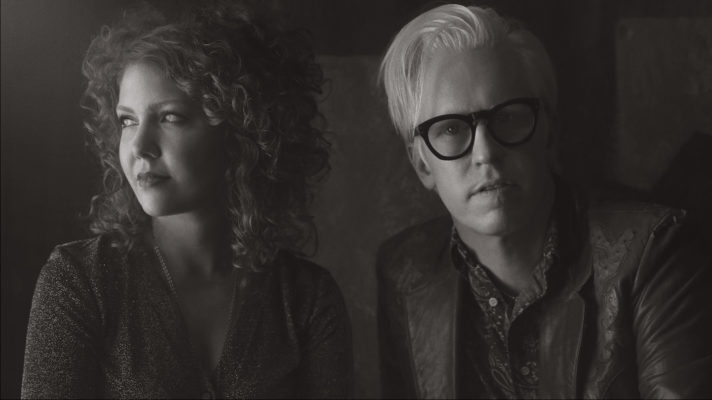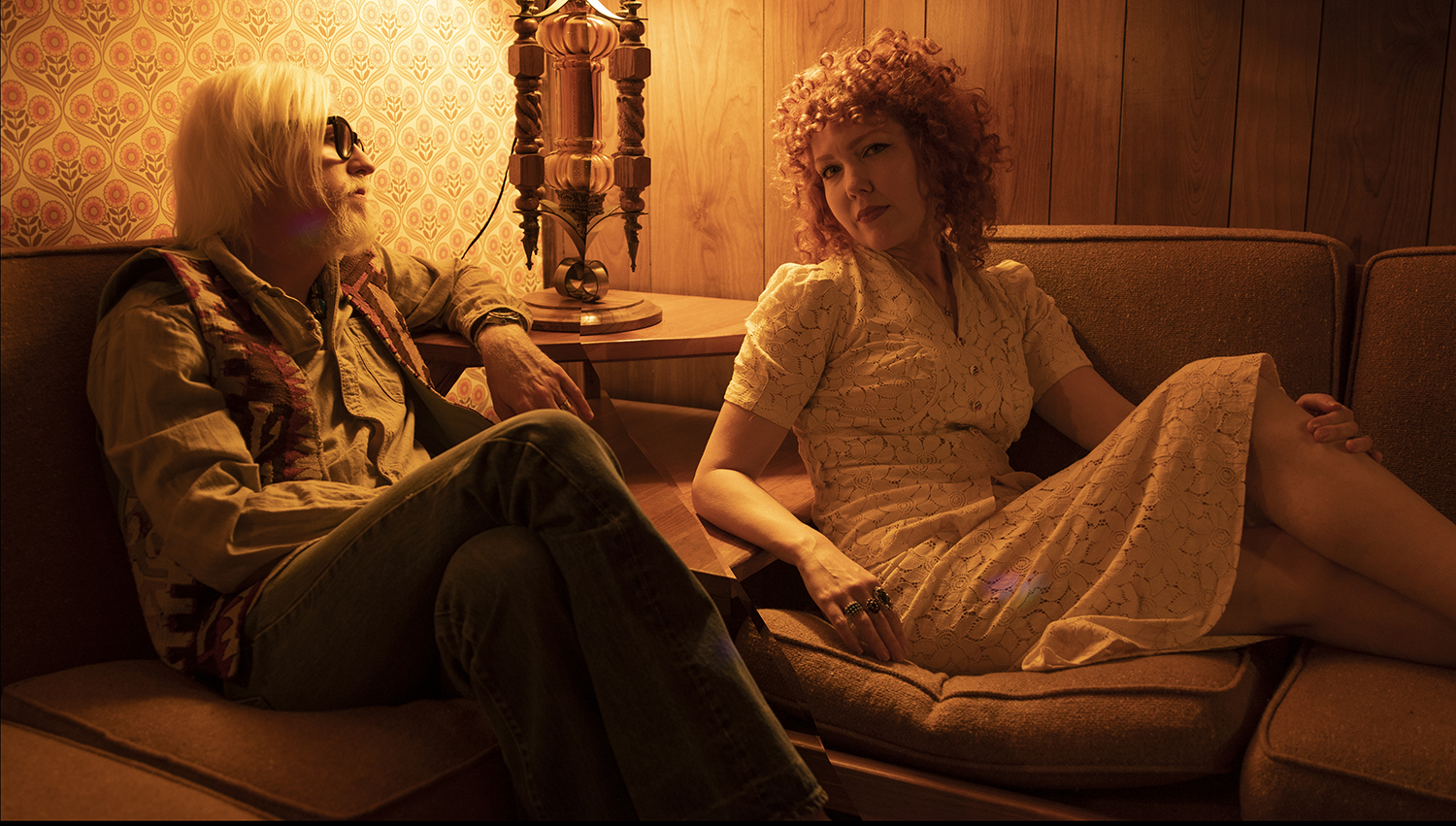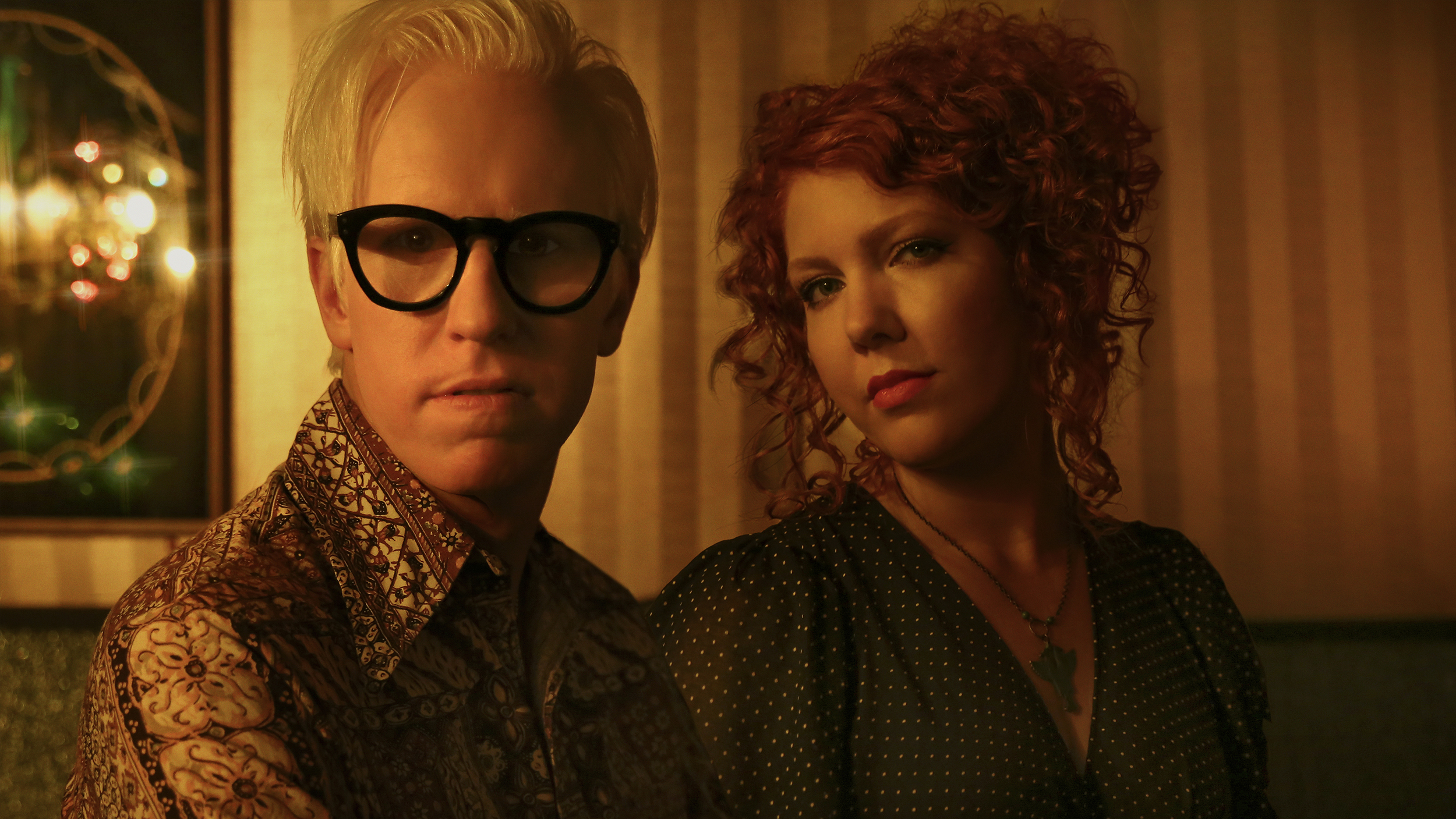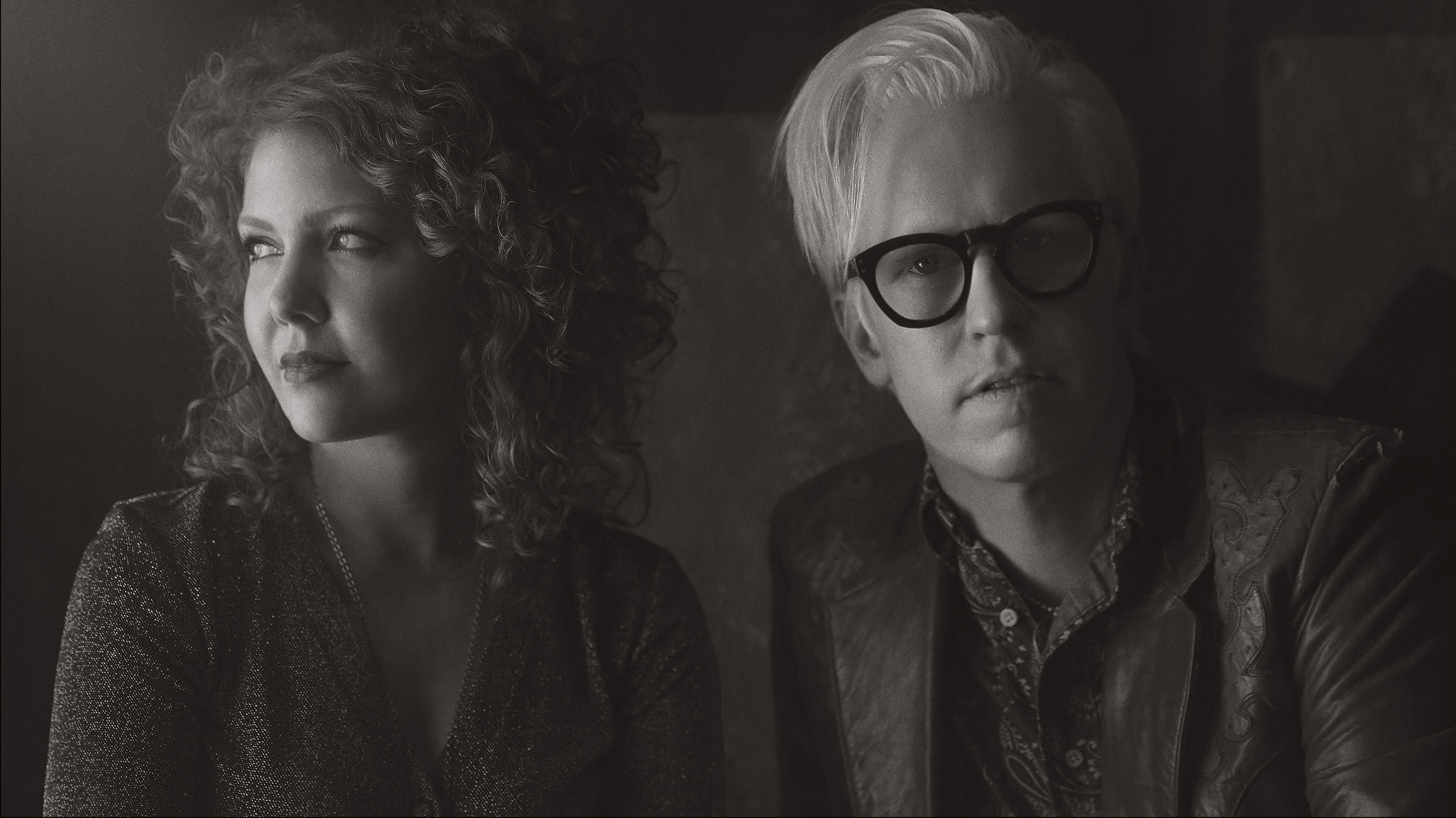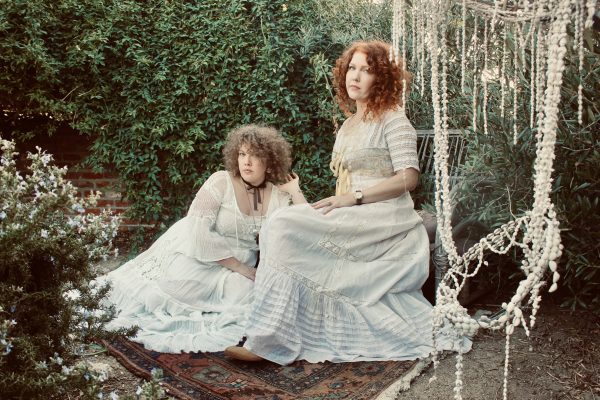
Ghosts are always with us, waiting for the right moment, or reason, to reveal themselves. Then a song, a stretch of road, or someone’s laughter hits your ear, and suddenly you’re back in the moment, feeling the rush of emotions as if time never moved on. For Eleanor and Bonnie Whitmore, two of roots music’s most accomplished songwriter/instrumentalist/vocalists, the ghosts chose to appear right as Covid became entrenched — when live music evaporated and people were isolated from each other. The songs they conjured became The Whitmore Sisters‘ debut album, GHOST STORIES, out January 21, 2022 on Red House Records. The album was produced by Chris Masterson.
Bonnie, whose four solo albums are all state-of-a-real-woman’s-heart jewels, decided to join sister Eleanor and her husband Chris Masterson in their Los Angeles closed circle for a break during quarantine this past year. Chris, who’s recorded four albums with his wife as The Mastersons, saw the visit as an opportunity to issue a practical mandate: If Bonnie was coming, it was time for the sisters to make an album. Not just an album, but “the album” — the musical inevitability that’s been simmering since a 22-year-old Eleanor was protecting her curly headed 15-year-old sister at gigs in local bars. The collection, along with two covers — a song by their pal Aaron Lee Tasjan (“Big Heart Sick Mind” and “On the Wings of a Nightingale” (written by Paul McCartney for iconic sibling duo The Everly Brothers) — complete GHOST STORIES.
“We’ve had a lot of loss, a lot of ex and dead boyfriends, a lot of friends that have passed on – and writing about the grief, especially working towards this record, there’s been a lot to consider.”
The sisters’ closeness and unconventional upbringing, not to mention their melodic sensibility and pure blood harmonies, create something truly special.
“We have all these things that make us us,” Bonnie says. “Our mother was an opera singer; our father was a folk singer. When I heard Ian & Sylvia for the first time, I didn’t realize that song wasn’t our parents. That’s how we discovered music.”
Trained to fly as girls by a father who was an accomplished Navy Air carrier pilot, they were exposed to amphibious planes, jets, props and all sorts of aviation possibilities. Consequently, The Whitmores see the world from an above-the-world perspective. Marveling at the whimsy that comes with flying, they also acknowledge that flight allows you to see things in larger ways and make connections that can’t be seen any other way.
Opening with the languidly sweeping “Learning To Fly,” the lush power-pop feel buoys The Whitmores’ dizzying close harmonies. Explaining the lessons absorbed from flying, it serves as a metaphor for coping with life without losing the beauty.
“You see things from a different perspective,” Bonnie says. Laughing, Eleanor joins in. “I was practically born in an airplane! In our family, you fly a plane, you sing and you play an instrument. You just do. My Dad was an airline pilot, so it’s not just a means of transportation to us.”
They laugh now about their close bond, joking about the time they went through a sisterly “divorce,” which Bonnie confesses was instigated by a “total lack of boundaries” towards her big sis. But their oddly beautiful, shared life experiences make GHOST STORIES inevitable. Eleanor explains the friction then and now, “We’re very much alike. It was part of the problem in the beginning, but now it’s a strength.
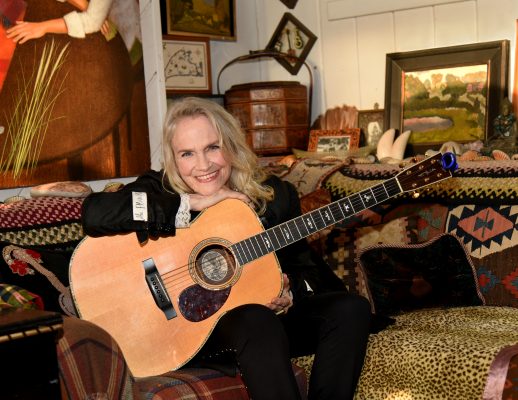
Kate Taylor, of the renowned Martha’s Vineyard via North Carolina musical clan that includes brothers James, Livingston, Alex and Hugh, arrives at Red House Records with a new studio album entitled: WHY WAIT! which reunites her with many of the key players, Russ Kunkel, Danny Kortchmar, and Leland Skar, who backed her on her 1971 debut, SISTER KATE. Produced by music veteran Peter Asher, who produced SISTER KATE, WHY WAIT! marks with its release the 50th anniversary of their original collaboration. WHY WAIT! was released on Red House Records in the late summer of 2021.
As on SISTER KATE, she covers some of her favorite songwriters and songs, including a version of her brother James’ “I Will Follow,” The Beatles’ “Good Day Sunshine” and Taj Mahal’s “He Caught the Katy,”. Kate, who loves singing R&B, contributes two self-penned songs: the upbeat title track, “Why Wait!” and the evocative “I Got a Message.”
She also does a version of Little Feat’s “Long Distance Love” and the 1963 girl group hit by The Exciters, “Tell Him.” She does versions of Tommy James’s “Crystal Blue Persuasion” and Nancy Wilson’s “How Glad I Am”.
The spark for this album was ignited at Kate’s birthday party when her agent (who also manages Asher), brought up the fact that the key players who appeared on Sister Kate are still around and very active (most recently as members of The Immediate Family). Asher loved the idea of recording with Kate again on their 50th anniversary, and Kate was instantly on board, writing the title track. Peter and Kate assembled a group of songs complemented by her bluesy voice.
James Taylor told Rolling Stone: “For Kate to be doing this with Peter, and that both of them have this life experience that brings them back together, it’s really a moving thing. I think it’s so great that Kate will have this next iteration, you know, this next chance for people to hear her and pick up on her.”
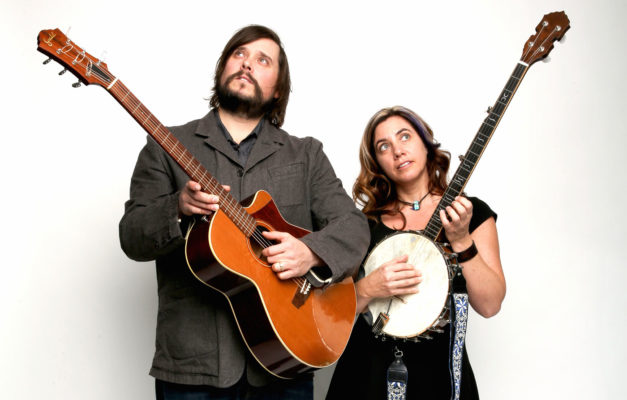
Roots powerhouse duo The Small Glories are Cara Luft & JD Edwards, a musical tour-de-force partnership planted on the Canadian Prairies. Thrown together purely by accident for an anniversary show at Winnipeg’s venerable West End Cultural Centre, The Small Glories could almost make you believe in fate.With a stage banter striking a unique balance between slapstick and sermon, these veteran singer-songwriters have a way of making time disappear, rooms shrink, and audiences feel as they are right there on the stage with the band — writing the songs, living the songs, performing the songs. It’s not uncommon for listeners to find themselves laughing, dancing, crying, or caught up in a good ol’ fashioned sing-along. “We’re folk singers, we try to write stuff that people can relate to,” says the multi-instrumentalist Edwards, whose looming stage presence and penetrating eyes find him the yin to Luft’s petite, snort-laughing yang. The material of a Small Glories concert is welcoming in terms of subject, folk-pop melody and instrumentation — songs of love, loss, and environment, delivered with soaring, interwoven vocals on various combinations of stomping clawhammer banjo, guitar and harmonica. However, a Small Glories performance is really about what happens in-between the songs. “The feedback we get from a lot of audiences is that it’s not just about the music for them,” Luft says. “It’s the whole package.”On record, The Small Glories take the musical synergy honed from hundreds of shows together, and expand it into a new soundscape amplified by pounding drums and other textural embellishments which only reinforce the magic of Luft and Edwards’ innate chemistry — a chemistry labeled the “Lennon-McCartney syndrome,” by Americana UK, writing, “Some things just work together… to witness a performance by The Small Glories is a rare opportunity to experience that indefinable quality that creates perfection.” But don’t just take a European reviewer’s word for it — the band’s debut album, 2016’s Wondrous Traveler was also praised in Pitchfork by legendary American rock critic Greil Marcus, who wrote, “…in moments (The Small Glories) find the darkening chord change the best bluegrass — from the Stanley Brothers to Be Good Tanyas — has always hidden in the sweet slide of the rhythm, the tiny shift where the person telling the story suddenly understands it.”It’s this yearning for understanding which finds the band often taking more time to introduce a song than it actually takes to play it. Luft, an original member of harmony sweethearts The Wailin’ Jennys and whose parents were folksingers influenced by the great activist Pete Seeger, knows that sometimes a song is all you need to bring people together. But often, it is more. “(Seeger) was the king of uniting people through singing,” Luft says. “There’s so much animosity and divisiveness in our world these days… as artists, part of our job is to somehow create unity.”The Small Glories duplicate and reinforce each others’ many strengths and yet allow their distinct personalities to shine through, resulting in a live show that is as heartwarming as it is hilarious, as finger-picking proficient as it is relatable, and as Canadian as, well… it’s very Canadian. But that hasn’t stopped them from winning over audiences from Nashville to the Australian outback. Their highly anticipated sophomore album “Assiniboine & the Red” comes out June 28 on Compass/Red House Records.
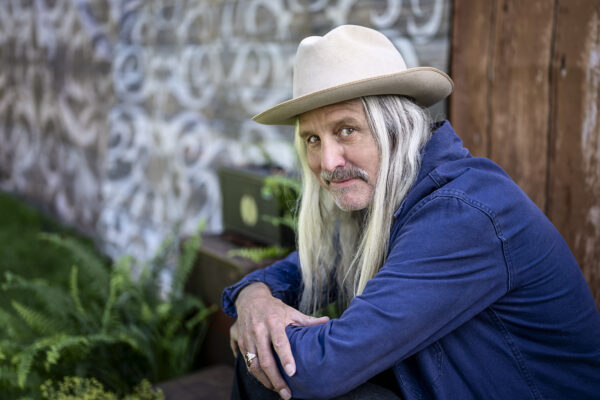
A dude named Steve Poltz (me) in East Nashville wakes up one morning and gets a call from another dude in East Nashville named Dex Green. Dex says, “Hey man, you live so close. You oughta come over and make some music. Maybe we’ll document it — who knows, maybe it’s a record.”
Capturing me in a studio is like convincing a whirling dervish to stop spinning long enough to sign a bill into law. It’s chaos, caffeine, and accidental poetry — art colliding with microphones and commerce in a glorious mess. That’s how JoyRide happened. No seatbelts, no helmets. Just unsaturated, unadulterated art. Real humans making real noise in real time.
JoyRide is my 14th solo album (not counting the Rugburns records, live things, and bootlegs floating around). I tour nonstop, so I usually have to be tricked into a studio under the guise of “just one song.”
The record opens with “If It Bleeds It Leads” — my kinda classic mischief: “I can never watch the news with you because you yell back — you scream like they can hear you in the television set.”
Then comes “Petrichor,” inspired by the beautiful smell after it rains. (I later discovered Phish has one too, but mine’s the barefoot cousin at brunch.)
“At It Again” follows, a cosmic co-write with my brother-from-another-meerkat, Jim Lauderdale, featuring Bryan Owings and Chris Donohue (Emmylou Harris’s rhythm section).
The title track “JoyRide” feels like a warm hug after a long road trip: “Free hugs, no shrugs, wrong drugs, bedbugs. Smiles, laughter, for here ever after.”
Side one ends with “The Son Of God.” A nutso magutso track of a conversation I may or may not have had with Jesus.“ I get to play both parts — Myself AND Jesus:
“The son of God contacted me about buying some Funk and Wagnalls encyclopedias. I said hello who’s this?”
“It’s Jesus”
“Jesus who?”
“Jesus H. Christ. God’s son.”
“How’d you get my number?”
“I have everyone’s number.”
“Even Liberace?”
“He’s on dead people’s speed dial.”
I will probably get crucified for this song, but hopefully it will be an AI video made by an angry man living in his mom’s basement.
Side two kicks off with “Love a Little Bigger” — a rowdy co-write with Vince Herman of Leftover Salmon. It opens with: “Jacob took a hammer and he went up a hill, built a nice house for his best friend Bill…” and ends with a sing-along reminder to forgive faster and swim more often.
“Fixin’ Up” (track seven) is my secret favorite — like a quarter from the Tooth Fairy you gotta dig around for.
“New Tattoo” follows — about a dude who got his lover’s face inked on his own face. (Bad plan, good song.)
“Brand New Liver” imagines swapping out your old one like a water pump instead of quitting drinking.
And then comes the closer: “Hairlift.” That one has my favorite line I’ve ever written: “I used to play ping pong with my old friend Mao Zedong. I thought he told me I was well hung, but he was speaking in the mother tongue.”
That’s JoyRide. Ten songs, no filter, no seatbelt, no map.
Big thanks to Dex Green for being the musical trickster who lured me into the studio.
Party on, weirdos.
According to Wikipedia, Steve Poltz (me) is a Canadian-American singer-songwriter and guitarist. He is a founding member of the indie-rock band the Rugburns and collaborated on several songs with singer Jewel, including the 1996 single “You Were Meant for Me”, which reached #2 in the US.
— Steve Poltz, East Nashville
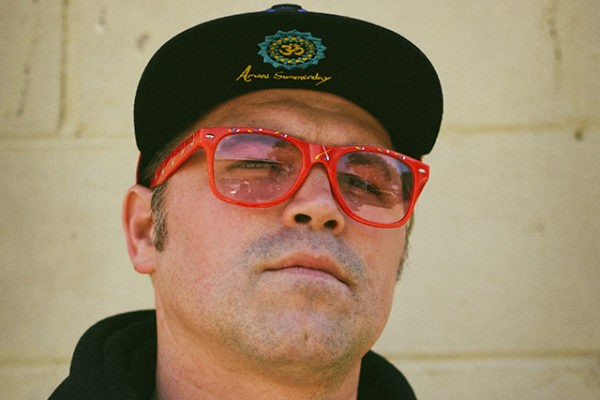
THE LEGEND OF THE ACTUAL WOLF: There are outlaws, and there are outlaws. Some practice the pose and cultivate the image, though seldom dirty their soft, bourgeois hands with anything actually outside the law. When they do, it is often despicable, irresponsible or just plain mundane. The Actual Wolf (aka Eric Pollard), however, is a real outlaw and has pled guilty to it. Between the bust and before the trial AW recorded a pair of EPs, each showing ‘another side of the Wolf’. It is one of the most obvious statements of existence: everything takes time, and the truly good, well crafted things in life take more than the rest. If the world has had to wait a while for another full-length release from Actual Wolf, it is only due to craft and cure.
Faded Days has been cultivated, cut and cured with the same patience as that of the grower. Written over two years in a spectrum of locations that the artist has called home at one point or another– Duluth (Minnesota, not Georgia), Brooklyn, Nashville and currently Oakland—The rich oils and aromatics– resting in darkness and appropriately aged to bring them to a perfect state. the album is subtly informed by that breadth of different atmospheres as much as it is richly colored his array of collaborators (Al Church, Steve Garrington, Jake Hanson and Jeremy Hanson) in a year-long distillation by engineer Brad Bivens in Minneapolis.
After all of that time, Faded Days is ready. Its distinctly emotional alkaloids are blissfully intoxicating, palliative and healing. And now that it is finished, a sort of finely crafted goodbye to the Faded Days of all of those other places and those people and events, it will only be a matter of time before Actual Wolf cultivates and distills the more recent days of his current Oakland existence, though who knows how long this will take: you cannot put a timeline on true craft.
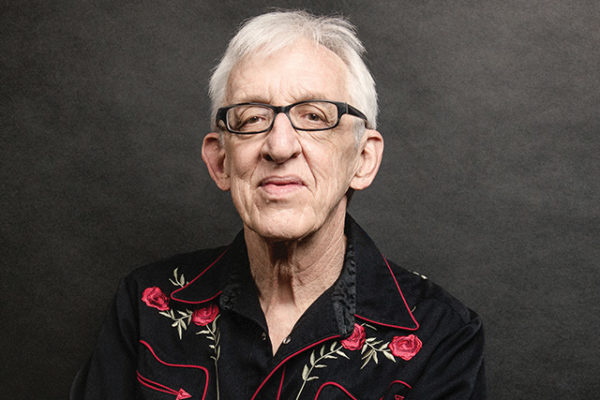
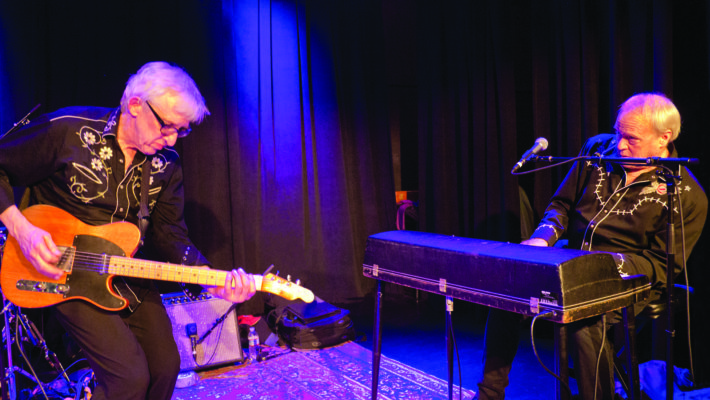
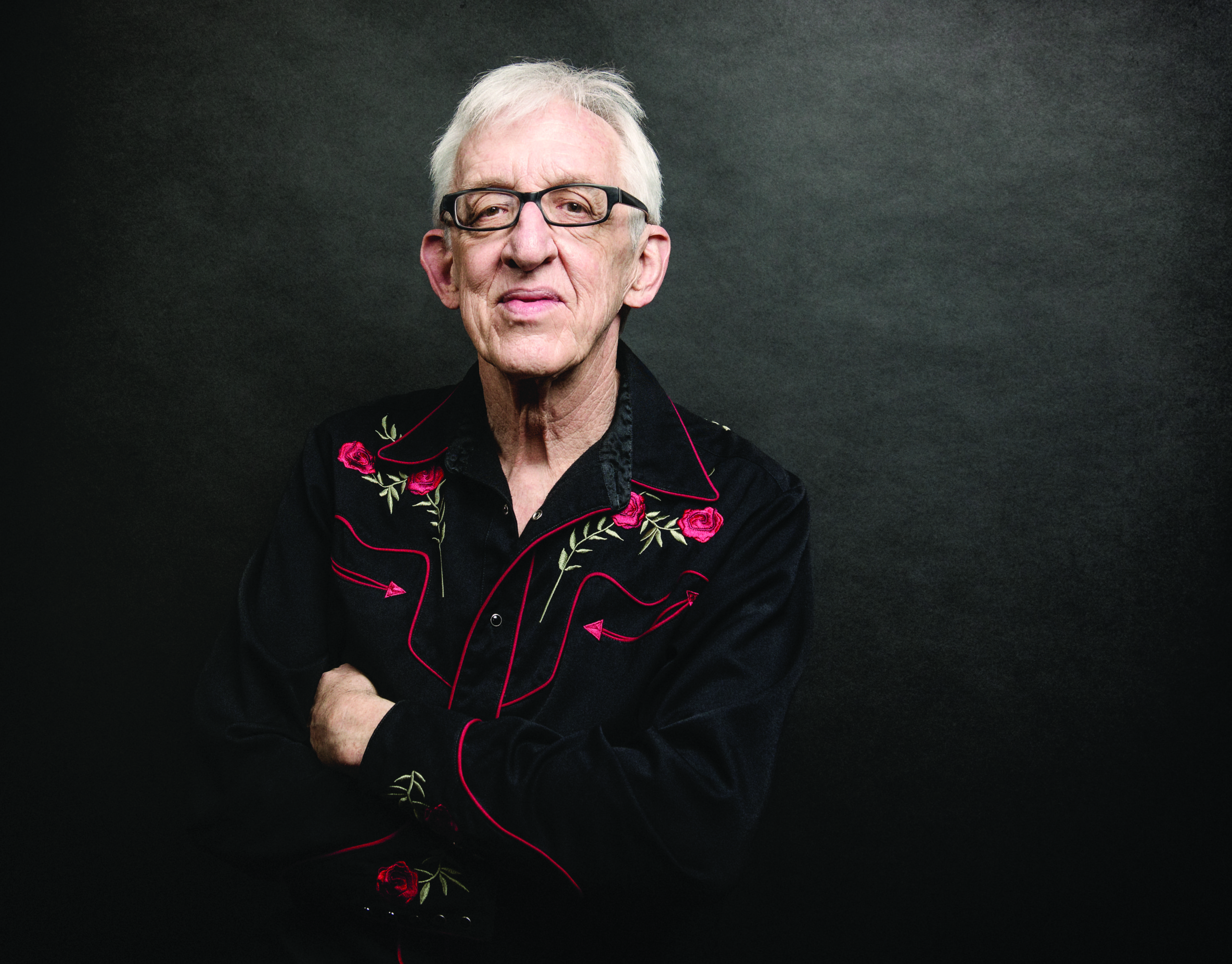
Grammy nominated guitarist, singer and songwriter Bill Kirchen first gained national recognition as a founding member of Commander Cody and his Lost Planet Airmen. They recorded seven albums for Paramount and Warner Brothers, one of which (Live From Deep in the Heart of Texas) rightfully made Rolling Stone’s list of the “100 Best Albums of All Time.” The original band established its place in the infancy of the Americana movement by being one of the first and only rock ’n’ roll bands to infuse their honky-tonk sound with pure, blood-and-guts country roots and Western swing. It’s Kirchen’s indelible guitar licks that define their top-ten charting hit, “Hot Rod Lincoln,” a song that eventually took on a post-Cody life of its own.
He has released a dozen CDs under his own name, and recorded and/or played guitar live with a who’s who of Americana and Roots Rock ‘N’ Roll, among them Gene Vincent, Link Wray, Bo Diddley, Hazel Dickens, Jimmie Dale Gilmore, Bob Weir, Phil Lesh, Narada Michael Walden, Doug Sahm, Hoyt Axton, Emmylou Harris, Maria Muldaur, Dan Hicks, Nick Lowe and Elvis Costello.
Before Bill Kirchen ever picked up a Telecaster he was a classical trombonist. That’s what he was studying as a teenager at Interlochen Center for the Arts in the early 60’s when he first fell for the guitar, in part due to the blossoming “folk scare” [his words] and in part thanks to his guitar-playing cabin counselor, Dave Siglin (founder of The Ark in Bill’s hometown Ann Arbor, Michigan). Just turned 16, Bill rescued his mom’s old banjo from the attic, got a copy of Pete Seeger’s How to Play the 5-String Banjo book and hitch-hiked to the 1964 Newport Folk Festival. Kirchen: “I witnessed stuff that knocked me out – Lightnin’ Hopkins, the Kweskin Jug Band, Son House, Johnny Cash, the Staples Singers, my original guitar hero Mississippi John Hurt. The top of my head flipped open and it’s never shut. It ruined me for normal work.” His strikingly powerful Dylan covers are staples of the live show.
Bill still keeps up an intense international touring schedule, recording and playing 200+ days a year.
His latest recording Transatlanticana, released in North America on Red House Records, went immediately onto the Americana Top 40 Radio chart and stayed for 5 months, cracking the Top 10 in 2016.
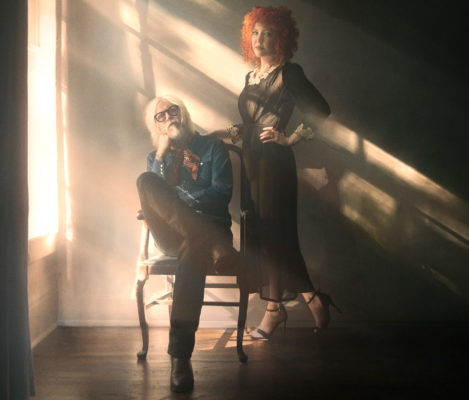
The Mastersons are singer-songwriters/multi-instrumentalists Chris Masterson and Eleanor Whitmore. When they’re not touring the world as valued longtime members of Steve Earle’s band the Dukes, the musical and marital twosome make inspired albums of their own emotionally vivid, deeply humanistic songs. The duo’s fourth set of original compositions is the appropriately titled NO TIME FOR LOVE SONGS, out March 6, 2019 on Red House Records.
The Mastersons, who now call Los Angeles home after stints in Austin, Brooklyn and Terlingua, Texas; recorded NO TIME FOR LOVE SONGS at L.A.’s legendary Sunset Sound Recorders with Shooter Jennings. The album was engineered and mixed by five-time Grammy Award-winning engineer, Ryan Freeland. Shooter had recruited The Mastersons to play on his albums Family Man (2012) and The Other Life (2013), and they’d recently reunited to work on Tanya Tucker’s acclaimed comeback album While I’m Livin‘, which Jennings co-produced with Brandi Carlile.
“I’ve known Chris and Eleanor since about 2010, and they’re unbelievable musicians and lifetime friends,” states longtime admirer Jennings. “They were perfect for Tanya’s record, and right after that, they asked me to produce NO TIME FOR LOVE SONGS. Their take on music and singing and instrumentation is so original, and I knew that I’d be getting something great out of the experience, just by being there. They both bring so much to the table as musicians, and they sing so beautifully together, and they write these intricate, beautiful songs. I just love working with them.”
“We were reminded of what a great musician and collaborator he was,” Eleanor notes. “After recording with Shooter at Sunset Sound on Tanya’s album, we decided that that’s exactly where we needed to make this record.”
“I do think geography comes into play when making records, and I think this record does have a Southern California feel to it,” Chris adds. “I don’t know if that’s because we move a little slower than when we lived on the east coast, or if it’s just where we are in our lives. It also doesn’t hurt to live in a city where so many talented people live. We have an amazing community of friends and collaborators that helped shape this album.”
Those collaborators include Eleanor’s sister Bonnie Whitmore, a notable songwriter and recording artist in her own right, who sang and played bass on the NO TIME FOR LOVE SONGS sessions, with bassist/keyboardist Tyler Chester (Andrew Bird, Sara Watkins, Madison Cunningham) and drummer Mark Stepro (Butch Walker, Ben Kweller, Jakob Dylan) rounding out the studio band. Longtime friend Aaron Lee Tasjan added background vocals on two songs.
NO TIME FOR LOVE SONGS explores the emotional challenges of a morally compromised era, and reflects the experiences that the pair has accumulated in their travels. Those experiences helped to inspire the big-hearted songcraft of such compelling new tunes as “Spellbound,” “Circle the Sun,” “Eyes Open Wide,” “The Silver Line,” “There Is A Song to Sing” and the album’s poignant title track, which showcase the Mastersons’ organic harmonies, stirring melodies and insightful lyrics, which consistently offer clear-eyed optimism in the face of loss and discouragement.
“We’ve had a lot to write about over the past three years,” says Eleanor. “After the 2016 election, we felt a profound sense of loss, not only for our loved ones but for our country. We felt a shift away from decency and kindness, towards ugliness. We’ve traded truth, reason, justice, journalism, facts and revering the Constitution for utter chaos.”
Chris and Eleanor’s new songs are also partially influenced by the loss of several people close to them, including Chris’ father, who passed away just after the release of the Mastersons’ 2014 album Good Luck Charm; friend and fellow musician Chris Porter; Austin musician and producer George Reiff, who played extensively with the Mastersons and produced their 2017 album Transient Lullaby. The pair also recently lost Dukes bassist Kelley Looney, with whom they toured and recorded for the past decade.
“The changes in our country and in the world make us long for the people we’ve lost along the way,” adds Chris. “Only by cataloging and acknowledging loss and grief can we move forward with gratitude for what we have.”
With NO TIME FOR LOVE SONGS the duo also celebrates the tenth anniversary of their partnership and continue their creative journey, crafting a collection of songs that could easily serve as the soundtrack to our lives—or at least one version of it.
Prior to launching their recording partnership, Chris played with Son Volt, Jack Ingram and others, while Eleanor lent her talents to projects by Regina Spektor and Angus & Julia Stone. In 2008, Chris stepped out with his self-released solo album The Late Great Chris Masterson, while Eleanor made her solo move with the D.I.Y. effort Airplanes. In 2012, they released their first collaborative effort, Birds Fly South. That album won widespread critical acclaim, with Esquire magazine designating the Mastersons as one of the “Bands You Need To Know Right Now.” Two years later, they followed up their debut with Good Luck Charm, which the Austin Chronicle praised for the duo’s “spunky wit and rare emotional maturity.” Good Luck Charm earned the Mastersons slots on NPR’s Mountain Stage and at high-profile festivals around the world. 2017’s Transient Lullaby explored new musical and lyrical territory, demonstrating how much the pair’s songwriting and performing skills had evolved with time, travel and experience.
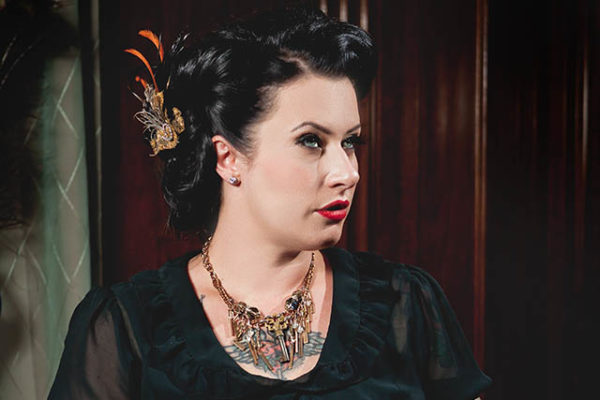
Much like the music, the story spurns era, expectation, and classification. The often unbelievable, sometimes harrowing, and wholly inspiring journey of Davina Sowers gave birth to her eponymous band Davina and The Vagabonds in 2004. As the tale goes, she grew up in economically depressed Allegheny town of Altoona, PA, which she now describes as “awesome in the industrial era, but horrible for high school.” She was adopted by her much-older stepfather when he was in his 80s; he passed when she was just 13. Through him and his Edison phonograph, she first heard The Ink spots, Sydney Bechet, Louis Armstrong and Louis Prima, Sister Rosetta Tharpe, and many others. “Great man. He was my angel and still is,” she says.
On her own, she vividly recalls hours in front of the record player where she religiously spun Led Zeppelin, Black Sabbath, and Simon and Garfunkel records belonging to her folk singer mom.
To this day, Davina still refers to music as “my first and eternal love.” Despite early dalliances with classical piano and guitar, she developed a heavy drug habit in high school, which morphed into heroin dependency, left her homeless, sent her in and out of jail, and brought on all manner of trouble. Kicking dope on the streets, she “got clean, started the band, and worked [her] ass off every day since.”
The front-woman, singer, and multi-instrumentalist describes this wild ride and herself best. “I am a miracle,” she exclaims. “It really is amazing I’m alive. I can barely express the life I’ve lived. Starting the band saved me. Even though I’ve been clean for a long time, I still suffer, but I persevere. For me, to be this miracle and shine for myself and others is really important.” Davina and The Vagabonds shine every time they play. To date, they’ve performed in 45 states, 12 European countries, and two Canadian provinces. Not to mention, they’ve earned feverish acclaim from the Chicago Tribune, NPR, and more in addition to performing on BBC’s international favorite late-night program Later… With Jools Holland and appearing on PBS’s Bluegrass Underground. The group’s full-length debut, Black Cloud, arrived in 2011 and cemented them as hometown heroes in Minneapolis. 2014’s Sunshine bowed in the Top 15 of Billboard’s Top Blues Album chart. During 2016, they unveiled their live album, Nicollet and Tenth, to the fervent embrace of fans. In between, they play nearly 200 gigs annually, including gracing the stages of festivals such as Edinburgh Fringe Festival.
2019 marks a new chapter as the group unleashes its first offering for Red House Records, Sugar Drops. A distillation of bluesy barroom baritone and bravado, graveyard jazz grooves, and
noir-ish confessional lyricism backed by boisterous piano, guitar, and strings, the music actualizes longstanding intent for Davina.
“It represents about one-hundred years of Americana,” she continues. “At the same time, I did exactly what I wanted to do. This album shows more confidence and awareness than ever before.”
For the first time, she entered a proper studio to record Sugar Drops. She holed up in Nashville’s Compass Sound Studio (aka “Hillbilly Central” back in the day), joined by producer (and Compass Records co-founder) Garry West, her trumpeter, string arranger, (and husband) Zack Lozier and a rotating cast of powerhouse players. Musicians include Todd Phillips (David Grisman, Robbie Fulks) on bass, Doug Lancio (Patty Griffin, John Hiatt, Tom Jones) on guitar and Reese Wynans (Stevie Ray Vaughan, Joe Bonamassa) on Hammond B3, among others. “Sonically, it’s the most professional,” she affirms. “This is my seventh album. Every other release was done in a basement or in a very lo-fi manner. It’s the first time I’ve had a guitarist or a producer and been in a real studio. I approached it differently. It’s the first time I’ve given my music to people I don’t sit in a van with for 14 hours a day. So much is new for me, and I’m proud of it.”
On the album, jazzy horns undercut the tension of “Bone Collection,” which essentially asks, “Do you want me to dig up all of my secrets and tell you everything about me?” Sparse piano echoes on the sadly beautiful “Deep End” where she details “clinical depression and mental illness,” pulling no punches. Both tracks place Davina firmly in the pantheon of New Orleans-style songwriters such as Allen Toussaint and Randy Newman. On the other end of the spectrum, “I Can’t Believe,” and an inspired take on Ben Harper’s “Another Lonely Day” land her firmly in the realm of modern day, traditional influenced indie artists such as Lake Street Dive and St. Paul and The Broken Bones. “Devil Horns,” conceived at three in the morning after watching a documentary about the history of Satan on YouTube, simply aims “to get people’s butts moving and tell a story about why the devil has horns.”
But in many ways, the title track best encapsulates the sweet and sour spirit of the music. “To me, each song is a little tiny sugar drop for me to use to make a whole album of beauty,” she says. “It’s about what has happened and how I overcame all of it. Plus, I love sugar,” she laughs. In the end, the songstress is ready to tell her story like never before. “Honestly, I want people to feel the honesty I’m trying to convey,” she leaves off. “Hopefully, they can relate. It’s just the truth—my truth.”
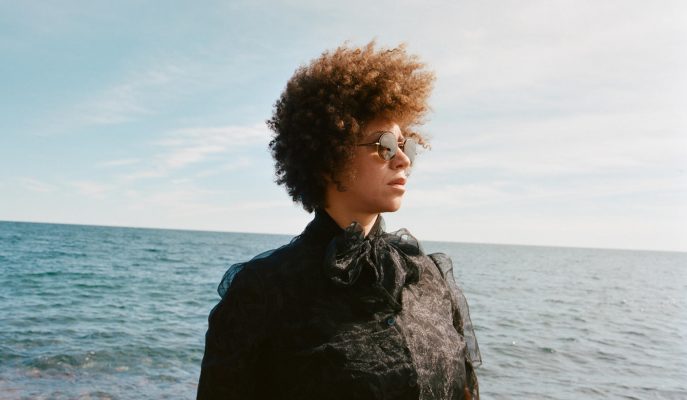
As the daughter of a blues musician, Chastity Brown was born with an innate ability to channel complex circumstances into beautiful, uplifting songs. But after surviving the isolation of the early pandemic and witnessing the global racial reckoning that manifested itself in the riots mere blocks from her South Minneapolis home, even she is surprised to hear the way her new album Sing To The Walls turned out.
“It’s a love album, in a way I didn’t plan on,” Chastity says.
Like so many artists who endured the uncertainty of the 2020 lockdown, Chastity’s instinct was to turn inward, at first out of self-preservation, and then because the new songs kept coming and coming. Since finishing her last album, 2017’s Silhouette Of Sirens, she estimates she’s written nearly 100 new songs, 10 of which found their way onto Sing To The Walls.
These songs unfold with Chastity’s expressive voice and expansive melodies, leading the listener through intertwining tendrils of atmospheric sounds. Even the titles hint at the album’s sense of optimistic yearning, from the dreamy opening track “Wonderment,” to her ode to healing a broken heart post-breakup “Curiosity,” to the pulsing promise of “Hope.”
With the exception of “Golden,” a searing indictment of white complacency and a cathartic release of post-uprising rage that comes halfway through the album (and was released in an earlier form in mid-2020), Sing To The Walls is ultimately an album about hope, connection, and love; an ode to the sweetness of life, even amidst a pandemic, even in a city that’s experienced so much pain.
“I think it’s an audacious response,” says Chastity. “Like how funk music came after Malcolm, Martin, and everybody got murdered in the ‘60s. Then the ‘70s popped off, and there was funk! This isn’t funk, but it’s rooted in that same kind of response. I just want to feel good. Straight up.”
The album was started in Stockholm, Sweden with revered session drummer and producer Brady Blade and completed at Chastity’s own home studio with her longtime drummer Greg Schutte. Additional production and mixing was done by Chris Bell in Austin, Texas.
For the first time, Chastity also served as the lead producer on some of the tracks, and co-producer on all of them. “I just was like, ‘why can’t I do it?’ It maybe meant that some things took longer, but it was like, ‘Where am I going now anyway?’ The way I’ve worked since the pandemic began, as far as songwriting and arranging and composing, I’ve never been so productive. Whatever touring life becomes going forward, I want to always carve out writing time. I’m addicted to it. And it’s such a cool high,” she says.
Sing To The Walls is a sonically expansive album; it mines the roots of Americana, folk, and soul music, but Chastity’s stories are delivered in a style that feels remarkably timely, modern, and forward-thinking. “I celebrate the emotional richness in the tradition, but in my music I’ve committed myself to moving forward and reflecting the experiences of those overlooked by tradition.”
In the same way, her lyrics seek to reach across a great divide. “I will sing to those walls, hope it gets through / And I will sing to your scars, they need healing too,” Chastity sings on the album’s title track, a pandemic love song about breaking through the physical, emotional, and social barriers that have been constructed around all of us in recent years. By the next track, “Like the Sun,” she breaks through into a melody that rises like a wide-open prairie sunrise—a heart-rending moment that demonstrates her talent for expressing big, beautiful ideas in her music, and to create songs that radiate bliss.
Even amid the chaos, while delivering the release-valve verses of “Golden,” she remains steadfast. “I’ve got joy even when I’m a target, if you think that’s political don’t get me started,” Chastity sings, demanding to know: “Why have I got to be angry?”
Between writing sessions she’s been vibing to chilled out, forward thinking artists like Leon Bridges, H.E.R., SZA, and Daniel Caesar, taking their cue to expand beyond genre and her folk/roots history to encompass her appreciation of all Black American musical art forms. “I also want to poke at what the blues is,” Chastity reflects. “It has a lot of stereotypes, like it’s mostly only played by blue-eyed white guys now. But what about Bessie Smith and Ma Rainey? I feel so closely connected, in a pure, undeviating lineage, to the heritage of being a Black, queer blues woman. I want to share this music with them, to say that I’ve listened, and I’ve done something new.”
“This album does not serve sorrow,” Chastity says bluntly. “And in that way, it’s my trying to emulate Zora Neale Hurston’s Their Eyes Were Watching God—seeking personal spiritual fulfillment while rejecting expectations. What matters to me is my survival—and for my survival, it’s been necessary to try to embrace some joy.”
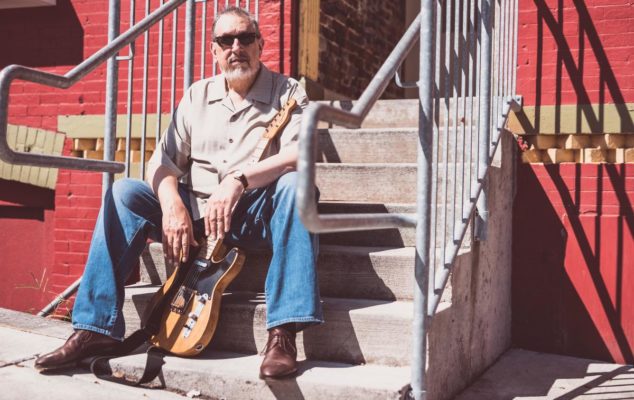
“We shall not cease from exploration, and the end of all our exploring will be to arrive where we started and know the place for the first time.” – T.S. Eliot
“There’s only two kinds of music – ‘the Star Spangled Banner’ and the blues.” – Willie Nelson, quoting renowned fiddler Johnny Gimble
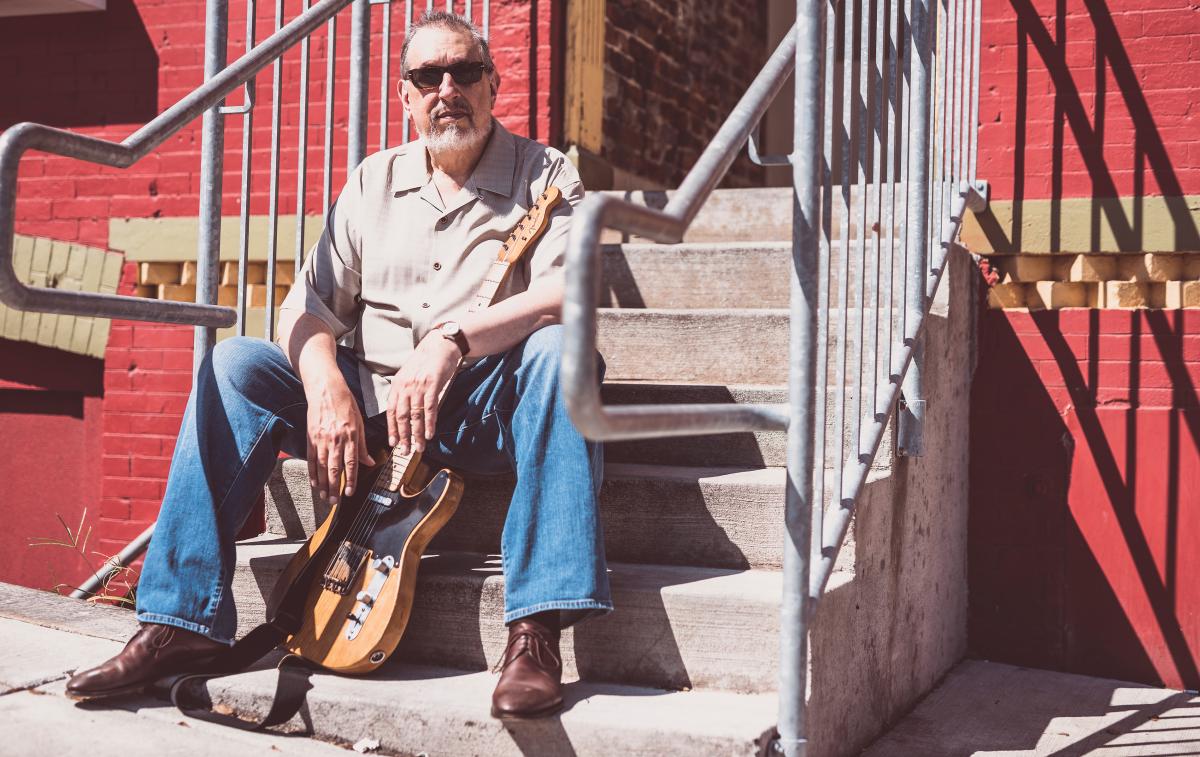
For Americana godfather David Bromberg, it all began with the blues.
His incredible journey spans five-and-a-half decades, and includes – but is not limited to – adventures with Bob Dylan, George Harrison, Jerry Garcia, and music and life lessons from seminal blues guitarist Reverend Gary Davis, who claimed the young Bromberg as a son. A musician’s musician, Bromberg’s mastery of several stringed instruments (guitar, fiddle, Dobro, mandolin), and multiple styles is legendary, leading Dr. John to declare him an American icon. In producing John Hartford’s hugely influential Aereo-Plain LP, Bromberg even co-invented a genre: Newgrass.
Add in a period of self-imposed exile from his passion (1980-2002), during which he became a renowned violin expert, and Wilmington, Delaware’s cultural ambassador; top that off with a triumphant return to music-making, and you have an amazing tale leading back to one place: the blues.
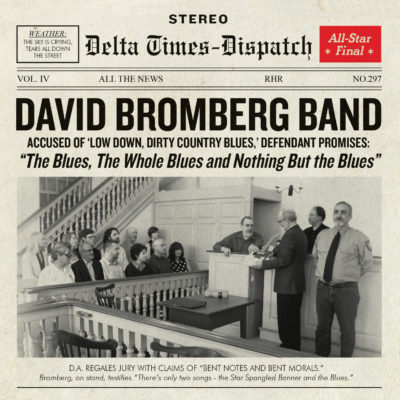
Now, with The Blues, the Whole Blues, and Nothing But the Blues, his first release for Red House Records, Bromberg and multi-Grammy-winning producer/accompanist Larry Campbell (Dylan, Levon Helm, Paul Simon) focus on the music David discovered in high school, when, circa late 50s, he was introduced to a friend’s dad’s collection of blues 78s. He’d only just taken up guitar as a means to pass the time while in bed with the measles.
“I loved those 78s so much,” says David, “I taped them on a portable reel-to-reel, so I could listen at home and learn.”
That love is evident in The Blues, the Whole Blues and Nothing But the Blues. The album is both blues primer and an opportunity to witness a master embracing this distinctly American music with passion and grace.
“There’s a lot of different types of blues on there,” Bromberg notes. “We decided to start it off with a dyed-in-the-wool blues [Robert Johnson’s “Walkin’ Blues”], but there’s also country blues [“Kentucky Blues”], and gospel-influenced blues [“Yield Not”].”
Bromberg, a onetime sideman himself, is quick to give props to his long-running road-and-studio cohorts: Butch Amiot (bass), Josh Kanusky (drums), Mark Cosgrove (guitar), Nate Grower (fiddle), and Peter Ecklund (cornet). Of producer, arranger, multi-instrumentalist, fellow Reverend Gary Davis acolyte, and old friend Larry Campbell, he says, “To use a baseball analogy, Larry is like a star at any position in the infield, because he can play them all.”
Since meeting in the early 80’s, Campbell and Bromberg had crossed paths many times. They finally worked together in Levon Helm’s studio for David’s 2013 return-to-form Only Slightly Mad. “He wanted to do a Chicago blues album then,” Larry says. “But we decided to remind folks of what he does better than anyone: the whole gamut of Americana, the full Brombergian. And we got some new fans. For this one, we went back to the blues, and made use of David’s great vocabulary in all veins of the genre.”
Bromberg’s guitar work remains a marvel; amped electric lead – both slide and fretted – and delicately powerful acoustic fingerpicking propel these songs with the same force that made him the go-to guy for acts ranging from the Eagles to Link Wray to Phoebe Snow. This is a man who can go full-on Chicago gutbucket with “You Don’t Have to Go” (a Bromberg original), then slay with the jazz inflections of Ray Charles’ “A Fool for You,” rendered here intimately solo. Although Bromberg points out he’s not the same guitarist he was before his two decades away from performing and recording. “I play differently,” he says. “I can’t play as fast, but playing slower gives me more time to think about what I’m doing.”
“He’s always able to plug into the emotion of a song,” Campbell says. “He’s incredibly inventive as a player. Sometimes restrictions can be good.”
Listeners can actually hear what the years have given Bromberg in the spartan, acoustic “Delia.” Bromberg originally covered this traditional nugget on his 1972 self-titled debut – a live, solo rendition with a spoken-word break. The new version features Campbell and Bromberg in the studio, revisiting Bromberg’s live arrangement from their occasional duo tours. It is mesmerizing, with gravitas only experience can bring. “Larry and I have played ‘Delia’ a lot,” Bromberg says. “I love what he does on it.”
Longtime fans will notice another difference: Bromberg’s voice; he’s really singing. The vocals cover a broad range: impassioned, vibrato-laden testifying; pew-jumping soul shouts; soft, confident, crooning; and, of course, his peerless raconteur chops (particularly in “You Been A Good Old Wagon”).
“When I first started,” Bromberg says, “singing was something I did between guitar solos. But during the period I did so little performing, I took some voice lessons, and now, I know more what I’m doing. I love singing now. Love it.”
Larry Campbell was impressed at the newfound vocal chops, too. “He is a better vocalist than ever,” he says. “He’s strong, and present. None of the songs took more than three takes. And he was able to take the old folk song ‘900 Miles’ [a “railroad song” made famous by Odetta and Woody Guthrie], and turn it into an electric blues that’s a real high point of the album for me.”
Although he remains the proprietor of the beloved David Bromberg Fine Violins in Wilmington, Delaware – “I love my shop,” he says – Bromberg makes time to tour with his quintet, and he’s already included every song in his live repertoire (save “Yield Not,” which requires a choir), from The Blues, the Whole Blues and Nothing But the Blues. As ever, he brings his characteristic devotional intensity to the music, invigorating his surprise third act with the same passion he felt as a teen, spinning those blues 78s, just before the road called.
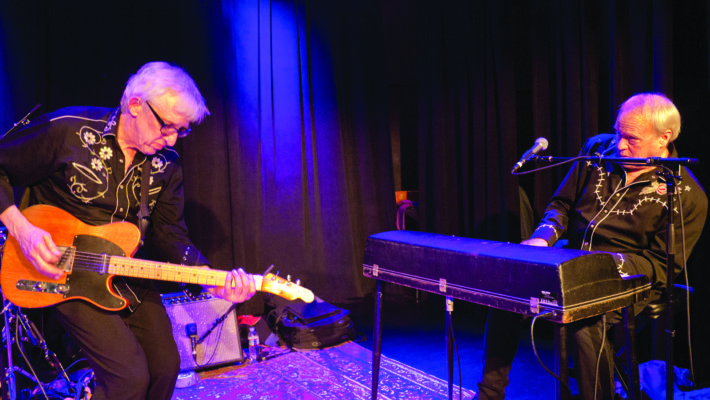
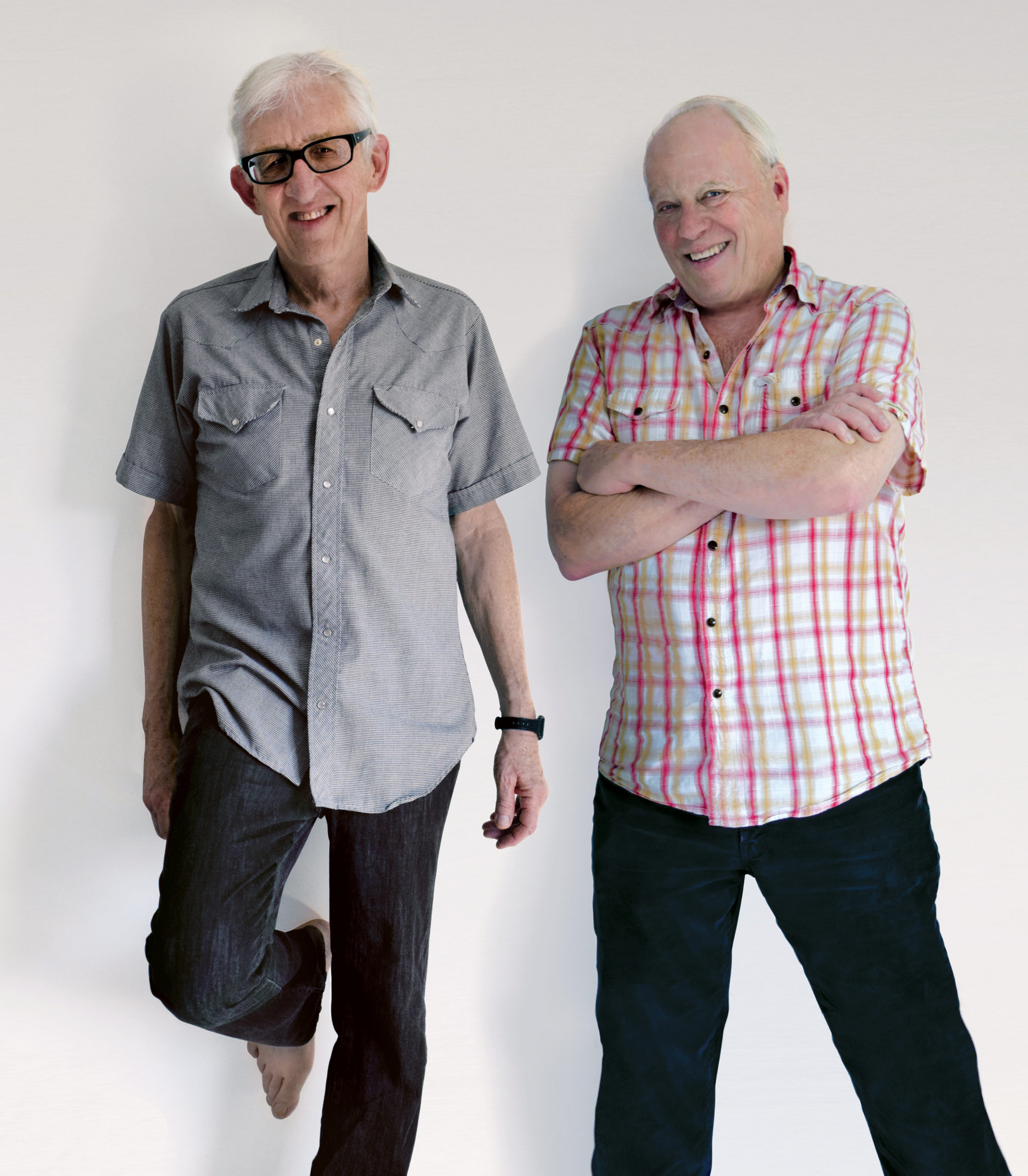
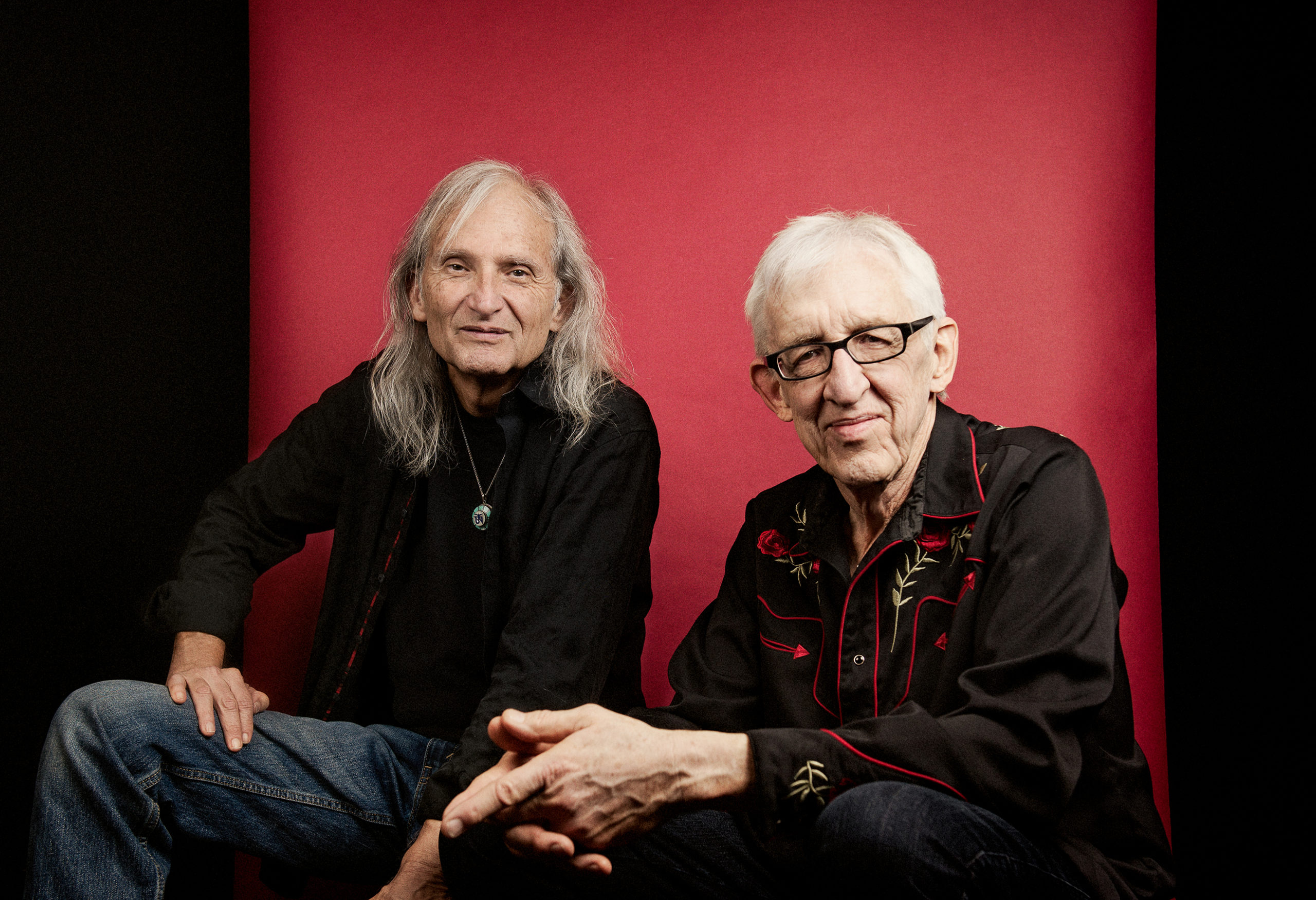
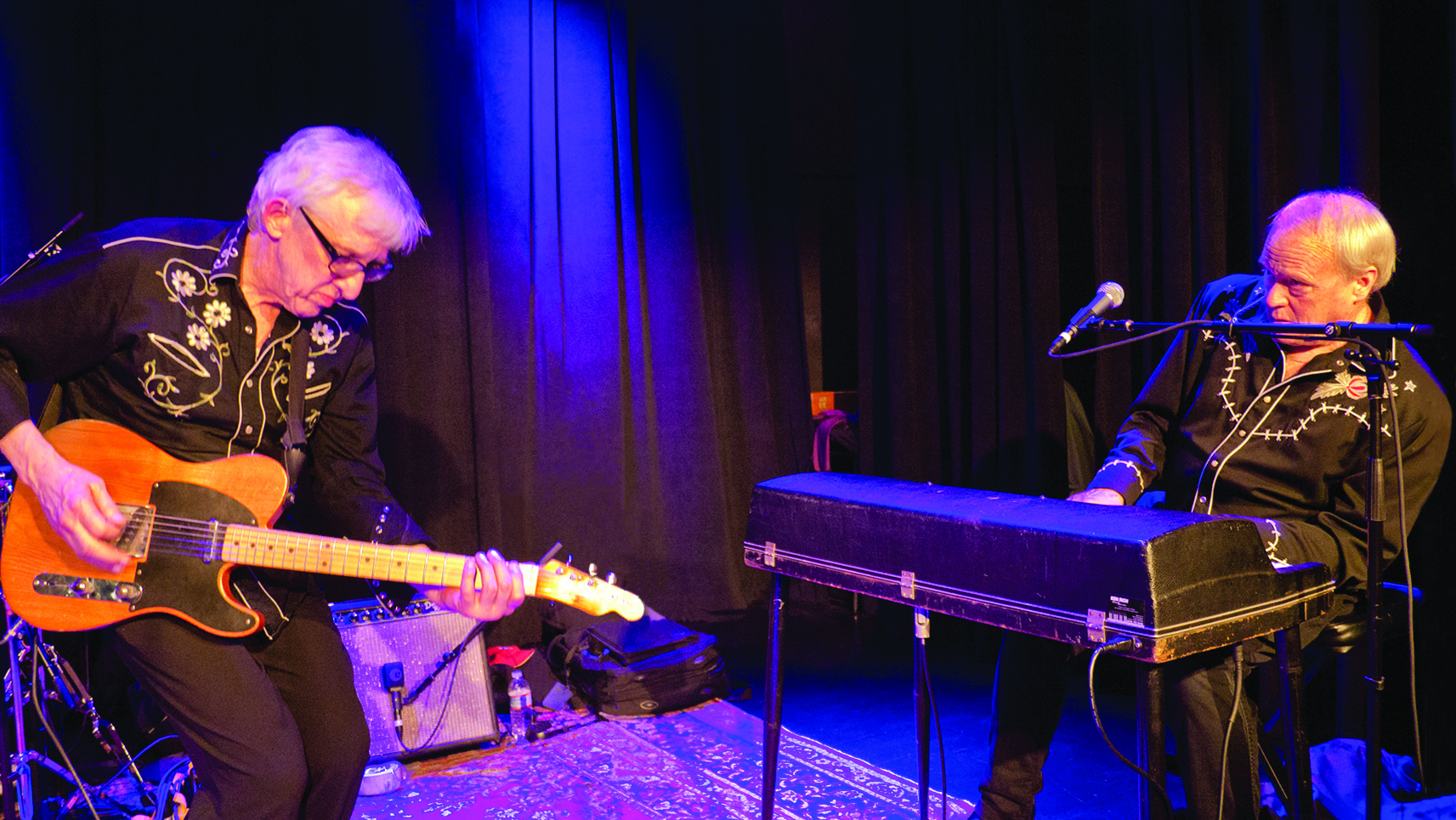
Bill Kirchen and Austin de Lone team up for a hands-across-the-Atlantic collection with their new studio album, Transatlanticana. This long-overdue release unites the pioneers of two major musical movements: Kirchen co-founded the original “Americana” band, Commander Cody and his Lost Planet Airmen, and his trademark Telecaster licks drove their hit “Hot Rod Lincoln” into the Top 10 in 1972. De Lone dropped out of Harvard to start Eggs Over Easy, moving to London and recording with Jimi Hendrix’s producer/manager and The Animals’ bass player Chas Chandler in 1970. The Eggs are the progenitors of British pub rock, the first link in the chain to punk rock, new wave and beyond. Backed by both their all-star British and American bands, Transatlanticana finds Kirchen and de Lone trading songwriting credits and lead vocals on this soulful and rocking collection. They kick it off with the timely “Hounds of the Bakersfield,” a tribute to the late Merle Haggard and the Bakersfield, CA sound.
Kirchen and de Lone cut the album in Austin and London, capturing on disc the best of their 30-year collaboration. Kirchen is Austin-based; de Lone is in the San Francisco Bay Area, but both artists have longtime ties with the UK scene: Kirchen has toured as a guitarist with Nick Lowe and put out three albums on UK label Proper Records; de Lone has toured as keyboard player for Lowe and Elvis Costello and put out his first solo album on UK label Demon Records.
They first collaborated in the mid-1970s, writing together as The Moonlighters: “We sent Nick Lowe a bunch of songs for Rockpile, but unbeknownst to us they had decided to break up,” Kirchen says. What de Lone got back was a letter from Lowe that began, “Dear hero o’ mine. There’s not many of us left…” Lowe then offered to produce them in London, and the resulting Moonlighters album, Rush Hour, came out in 1983 on the Edsel label. Since then, Bill and Austin have teamed up with with Lowe and Costello many times: de Lone has worked with Lowe, Paul Carrack and Costello on several tours and Kirchen held the guitar chair for Lowe’s critically acclaimed Impossible Bird disc and tour. In 2008, Costello borrowed the title cut from Kirchen’s album Hammer Of The Honky-Tonk Gods for his band name at the Hardly Strictly Bluegrass Festival in San Francisco featuring de Lone, Kirchen, Emmylou Harris, Gillian Welsh and Jim Lauderdale.
The songs of Transatlanticana represent the core elements of Americana music – R&B, country, rock and even a gospel track. Butch Hancock duets his song “Oxblood” with Kirchen. It’s a meaty slice of Texas boogie recorded with the Austin contingent. “I guess they used to color concrete with ox blood; I thought it was just an old shoe polish color” says Kirchen.
Spirited and served up with wit and humor, Transatlanticana is a gem –- a ringside seat to these transatlantic sessions by a group of like-minded, top-of-their-game players enjoying each other’s musical company. For tour dates and more info go to www.billkirchen.com.

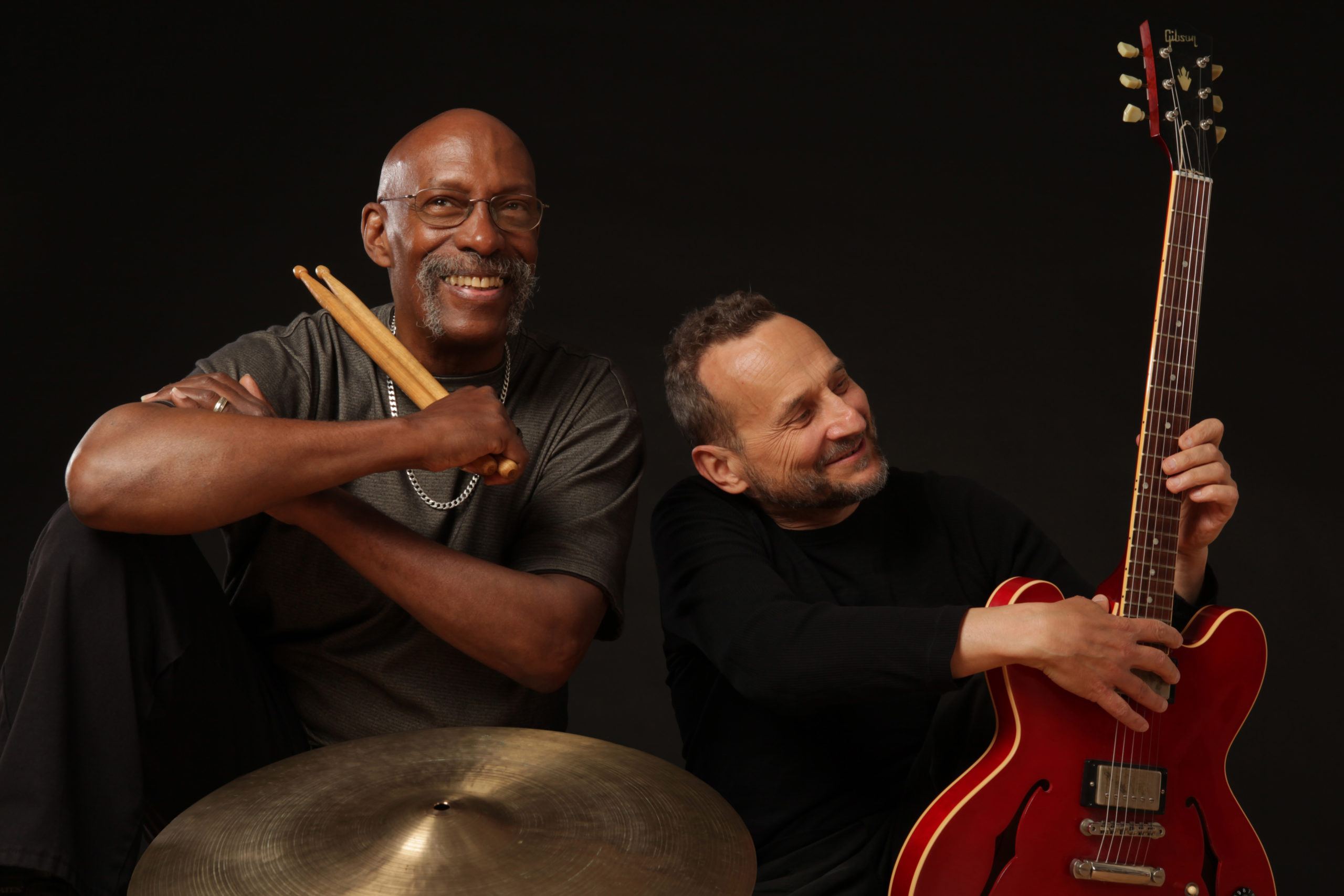
Dean Magraw is a consummate guitarist, playing with wit and soulful abandon. A performer like no other, he is part-comedian, part-philosopher and all-around musical genius. Transcending genre, he has performed with a cornucopia of collaborators from jazz organist Jack McDuff to folk icon Greg Brown, trad Irish supergroup Altan to classical violinist Nigel Kennedy.
Growing up in a musical household, Dean soaked in a smorgasbord of musical influences. His parents danced to big band swing; his sister sang showtunes and his guitar and veena playing brother’s record collection was full of folk, jazz, rock, and classical Indian albums. But it was the opening riff to the Rolling Stones’ “19th Nervous Breakdown” that caused him to fall in love with the guitar.
In his formative years Dean quickly expanded his musical knowledge by incorporating his love of myriad musical styles into his playing and writing. With his eclectic background and musical versatility, he quickly evolved into one of the most innovative guitarists on the international scene as well as one of the most accomplished and original composers, arrangers and producers around. From playing on public radio’s A Prairie Home Companion to leading up his own experimental jam band Eight Head, Dean has literally generated a new world of music.
In addition to his role as an in-demand sideman on over two hundred recording projects, Dean has proven pivotal in creating more than a dozen albums, including five for Red House Records: Wise-Magraw (1985), Broken Silence (1994), Seventh One (1998), Duo (1991), an album he recorded with Emmy Award winning multi-instrumentalist Peter Ostroushko and How the Light Gets In (2010) with Marcus Wise.
Diagnosed with MDS (myelodysplastic syndrome) in 2009, a bone marrow transplant prevented him from performing but not recording. During the early stages of his medical treatment, Dean went into the studio with his longtime friend and collaborator Wise to record How the Light Gets In, an engaging collection of highly original compositions nurtured in a refreshingly distinctive soundscape. By 2011, he was well enough to return to the state, playing with Red Planet, Eight Head and Eric Kamau Gravatt, among others.
Eric Kamau Gravatt is an American musician, educator and world-renowned drummer and percussionist, the Philadelphia native has played with world-class jazz artists and toured internationally since the 1970s. He started his career in the mid-1960s, recording with artists from that era including Byard Lancaster, Lloyd McNeill, Andrew White, Terumasa Hino, Eddie Henderson, and Joe Henderson.
Over a career spanning almost five decades, Gravatt has played with many of the greatest musicians and bands of jazz, including Woody Shaw, Howard Roberts, Albert Ayler, Sonny Fortune, Kenny Dorham, Gary Bartz and more. Gravatt’s career attracted worldwide attention while he played with Weather Report, beginning with 1972’s I Sing The Body Electric. After the making of the group’s 1973’s Sweetnighter he decided to leave Weather Report and joined the group Natural Life in 1974.
Gravatt then moved to the Minneapolis where he continued to play; he recorded with McCoy Tyner’sFocal Point in 1977 and worked as a prison guard. He has always insisted that although he was disappointed with the manner in which the business of jazz had forced him into working outside music in order for him and his family to survive, he felt no bitterness. During these years he played with his band Source Code. He also recorded with Bill Carrothers on 1986’s The Artful Dodger.
Since retiring from working in the prison system, Gravatt runs a recording studio and a publishing company, 1619 Music, and directs the group Source Code. In 2004, he toured with Tyner’s big band and also worked in a trio with Tyner and Charnett Moffett, garnering rave reviews and performing at prestigious festivals in the USA and overseas. He currently lives in Minnesota and has returned to recording with Fire on the Nile, his first release for Red House Records.
Gravatt attended Cheyney State College, Temple University, Howard University and the University of Minnesota. As an educator, he has taught at the Philadelphia Students’ Symphony Orchestra, at the New Thing Art & Architecture Center in Washington, DC and with the African Heritage Dancers & Drummers. He has lectured at Georgetown Day School, the Children’s Theater Company, Swarthmore College and more.
-->